ISO 2026-W07
Week begins: Monday, February 9, 2026
Calendar
| Date | Zodiac day | Events |
|---|---|---|
| Mon, Feb 9, 2026 | ♒ 21 | 🌗 Last Quarter — 12:43:07 UTC β Mon —  4 3.8 — Tropical Winter 4 3.8 — Tropical WinterFinest NGC 32 / NGC 2237 · Rosette / C49 / NGC 2237-2239 · Rosette Nebula —  6 5.5 — Tropical Winter 6 5.5 — Tropical WinterC50 / NGC 2244 — 5 4.8 — Tropical Winter |
| Tue, Feb 10, 2026 | ♒ 22 | |
| Wed, Feb 11, 2026 | ♒ 23 | Alhena (γ Gem) —  2 1.9 — Tropical Winter 2 1.9 — Tropical WinterFinest NGC 33 / NGC 2261 · Hubble's Variable Nebula / C46 / NGC 2261 · Hubble's Variable Nebula — — Tropical Winter |
| Thu, Feb 12, 2026 | ♒ 24 | |
| Fri, Feb 13, 2026 | ♒ 25 | Sirius (α CMa) — -1 -1.4 — Tropical WinterSirius and Sirius B (α Canis Majoris) — — Tropical WinterM41 — 5 4.6 — Tropical Winterα Pic — 3 3.2 — Southern Winter |
| Sat, Feb 14, 2026 | ♒ 26 | |
| Sun, Feb 15, 2026 | ♒ 27 |
Weekly Solar-System Ephemeris
Snapshot: Week begins February 9, 2026, 00:00 UTC.
(-90° to +90°; defaults +45°, 21:00 LAT)
| Body | ☉︎ | ☽︎ | ☿︎ | ♀︎ | ♂︎ | ♃︎ | ♄︎ |
|---|---|---|---|---|---|---|---|
| Ecliptic | ♒︎ 20°14′ β −0°00′ | ♏︎ 14°27′ β −4°47′ | ♓︎ 3°34′ β −1°04′ | ♒︎ 28°13′ β −1°27′ | ♒︎ 13°00′ β −1°04′ | ♋︎ 16°32′ β +0°19′ | ♓︎ 29°28′ β −2°09′ |
| Observing |  | -10.3 | ☉︎ | ☉︎ | ☉︎ | -2.6 | 1.0 |
| Rise | 06:56 | 00:36 | 07:36 | 07:26 | 06:45 | 13:58 | 08:37 |
| Set | 17:04 | 09:47 | 18:10 | 17:41 | 16:20 | 05:24 | 20:25 |
Extended targets:
| Body | ⚳︎ | ♅︎ | ♆︎ | ♇︎ |
|---|---|---|---|---|
| Ecliptic | ♈︎ 17°50′ β −6°41′ | ♉︎ 27°28′ β −0°11′ | ♈︎ 0°22′ β −1°19′ | ♒︎ 3°57′ β −3°49′ |
| Observing | 9.1 | 5.7 | 7.8 | ☉︎ |
| Rise | 09:40 | 10:45 | 08:35 | 06:35 |
| Set | 21:51 | 01:36 | 20:31 | 15:21 |
β = ecliptic latitude (+ north, − south).
Rise and set are Local Apparent Time for the selected latitude.
Naked-eye observing uses the Sun’s altitude at the selected Monday observer time: Daylight (Sun ≥ −0.833°), Civil twilight (−0.833° to −6°), Nautical twilight (−6° to −12°), Astronomical twilight (−12° to −18°), and Night (below −18°).
Solar Glare identifies a body too close to the Sun when the sky-state rule does not already supersede its naked-eye classification.
The Sun’s observing status uses this same five-state sky classification.
Planet Finder
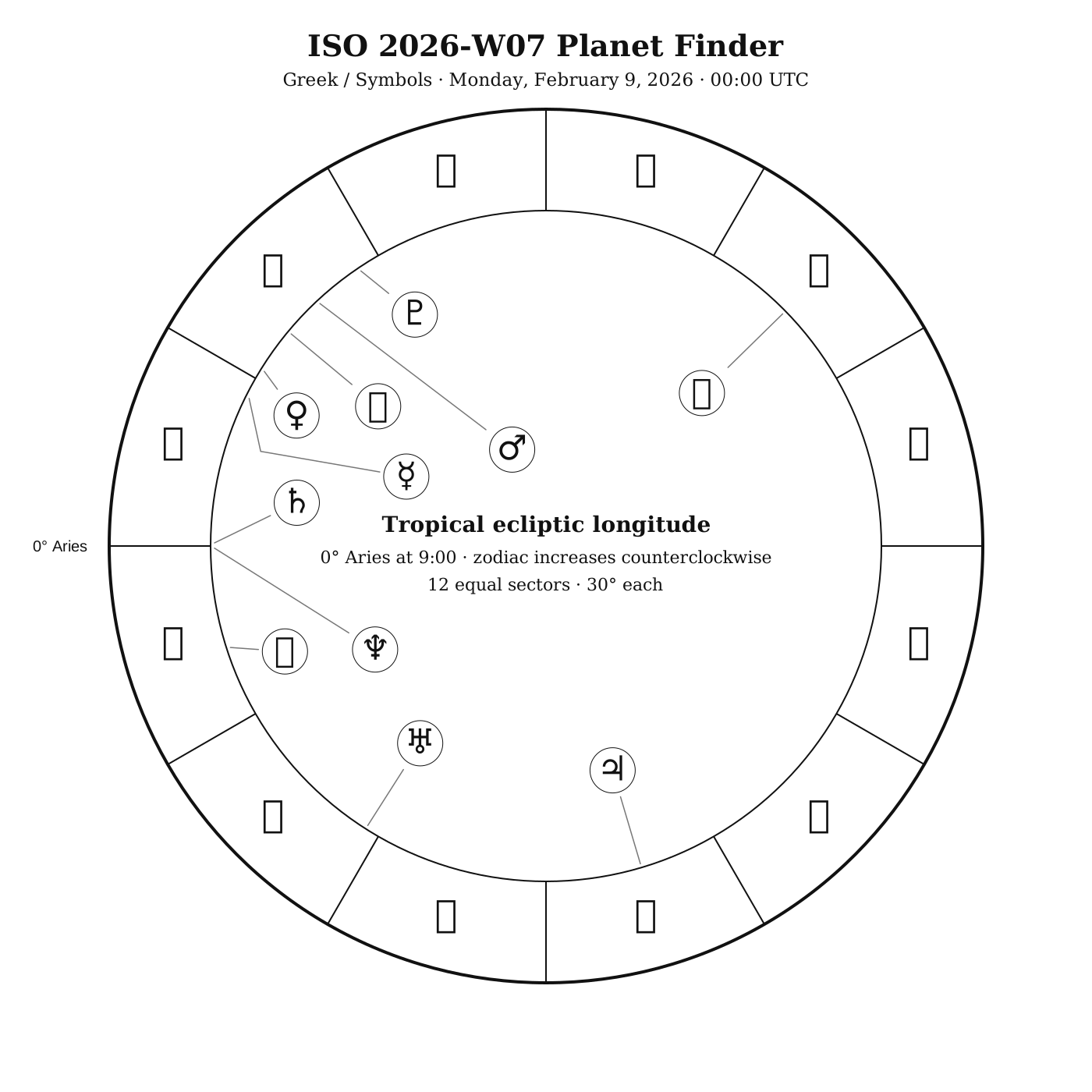
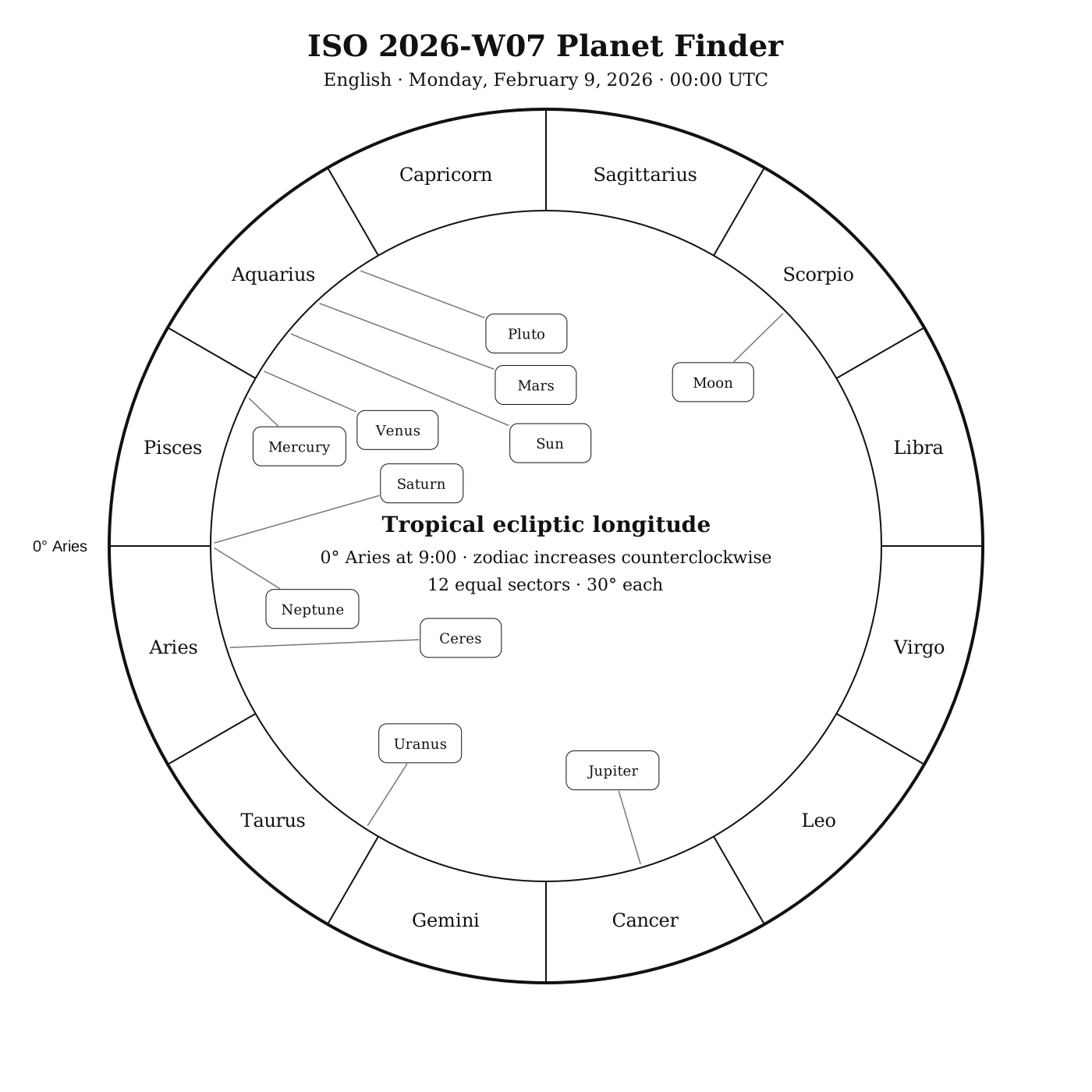
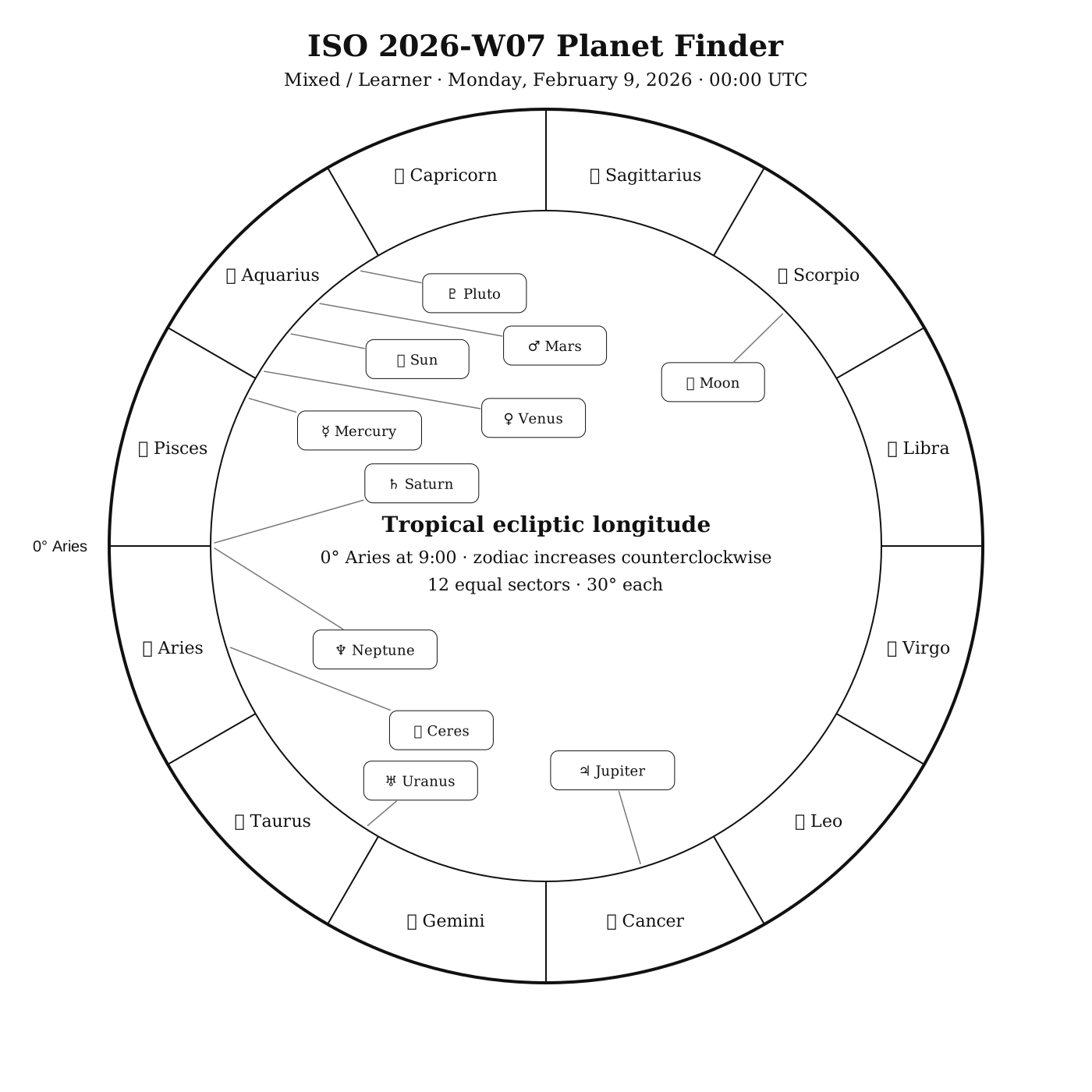
Sky Notes
Kilroy: Sky Notes · generated 2026-10-12 00:42:16 UTC
ISO 2026-W07 runs from February 9 through February 15. Saturn and Neptune are separated by about 0.9° in geocentric ecliptic longitude at the Monday 00:00 UTC snapshot.


Naked eye: 🌗 Last Quarter — 12:43:07 UTC. Moderate moonlight makes timing and local sky position important for faint targets. Use Alhena, Sirius, α Pic as the week’s fixed-sky framework.
Planets: Moon: Naked eye; magnitude -10.3; direct motion; 55.2% illuminated. Below the horizon at 21:00 local apparent solar time, 45°N. Monday 00:00 UTC snapshot. Conjunction with Pluto in ecliptic longitude Feb 15 14:09 UTC. Mercury: In solar glare; magnitude -1.2; direct motion; 86.9% illuminated. Monday 00:00 UTC snapshot. Venus: In solar glare; magnitude -3.9; direct motion; 99.1% illuminated. Monday 00:00 UTC snapshot. Mars: In solar glare; magnitude 1.1; direct motion; 99.8% illuminated. Monday 00:00 UTC snapshot. Ceres: Telescope; magnitude 9.1; direct motion; 97.8% illuminated. Monday 00:00 UTC snapshot. Jupiter: Naked eye; magnitude -2.6; retrograde motion; 99.7% illuminated. Monday 00:00 UTC snapshot. Saturn: Naked eye; magnitude 1.0; direct motion; 99.9% illuminated. Below the horizon at 21:00 local apparent solar time, 45°N. Monday 00:00 UTC snapshot. Uranus: Binoculars; magnitude 5.7; direct motion; 99.9% illuminated. Monday 00:00 UTC snapshot. Neptune: Telescope; magnitude 7.8; direct motion; 100.0% illuminated. Below the horizon at 21:00 local apparent solar time, 45°N. Monday 00:00 UTC snapshot. Pluto: In solar glare; magnitude 14.6; direct motion; 100.0% illuminated. Monday 00:00 UTC snapshot. Conjunction with Moon in ecliptic longitude Feb 15 14:09 UTC.


Binoculars: Trace Monoceros’s charted figure in the finder, then identify β Mon at its charted position.
Small telescope: Rosette: consult its dedicated finder and observing story for equipment guidance; NGC 2244: consult its dedicated finder and observing story for equipment guidance; Hubble's Variable Nebula: consult its dedicated finder and observing story for equipment guidance; M41: consult its dedicated finder and observing story for equipment guidance
Substantial telescope: No fixed-sky Calendar object is classified as requiring a substantial telescope this week.
Other objects listed this week: None
Mercury
Mercury: in solar glare at the Monday 00:00 UTC snapshot. Rises 07:36; sets 18:10 (45°N, local apparent solar time). Visual magnitude -1.2. The disk is 86.9% illuminated (gibbous). It is 13.4° from the Sun, on its east side. Motion is direct at 1.723° per day in ecliptic longitude at the snapshot. Position reference: Sadalmelik, 11.7° away. Mercury: 11.7° from Sadalmelik in the Pathfinder.
Venus
Venus: in solar glare at the Monday 00:00 UTC snapshot. Rises 07:26; sets 17:41 (45°N, local apparent solar time). Visual magnitude -3.9. The disk is 99.1% illuminated (nearly full). It is 8.1° from the Sun, on its east side. Motion is direct at 1.253° per day in ecliptic longitude at the snapshot. Position reference: Sadalsuud, 11.0° away. Venus: 11.0° from Sadalsuud in the Pathfinder.
Moon
Moon: naked eye at the Monday 00:00 UTC snapshot. At 45°N and 21:00 local apparent solar time, it is 37.4° below the horizon. Rises 00:36; sets 09:47 (45°N, local apparent solar time). Visual magnitude -10.3. The disk is 55.2% illuminated (waning gibbous). It is 95.8° from the Sun, on its west side. Motion is direct at 11.956° per day in ecliptic longitude at the snapshot. Position reference: Zubenelgenubi, 5.2° away. Conjunction with Pluto in ecliptic longitude Feb 15 14:09 UTC. Moon: 5.2° from Zubenelgenubi in the Pathfinder.
Mars
Mars: in solar glare at the Monday 00:00 UTC snapshot. Rises 06:45; sets 16:20 (45°N, local apparent solar time). Visual magnitude 1.1. The disk is 99.8% illuminated (nearly full). It is 7.3° from the Sun, on its west side. Motion is direct at 0.785° per day in ecliptic longitude at the snapshot. Position reference: Dabih, 10.3° away. Mars: 10.3° from Dabih in the Pathfinder.
Jupiter
Jupiter: naked eye at the Monday 00:00 UTC snapshot. At 45°N and 21:00 local apparent solar time, it is 66.2° above the horizon. Rises 13:58; sets 05:24 (45°N, local apparent solar time). Visual magnitude -2.6. The disk is 99.7% illuminated (nearly full). It is 146.3° from the Sun, on its east side. Motion is retrograde at 0.093° per day in ecliptic longitude at the snapshot. Position reference: Pollux, 9.5° away. Jupiter: 9.5° from Pollux in the Pathfinder.
Saturn
Saturn: naked eye at the Monday 00:00 UTC snapshot. At 45°N and 21:00 local apparent solar time, it is 6.8° below the horizon. Rises 08:37; sets 20:25 (45°N, local apparent solar time). Visual magnitude 1.0. The disk is 99.9% illuminated (nearly full). It is 39.3° from the Sun, on its east side. Motion is direct at 0.106° per day in ecliptic longitude at the snapshot. Position reference: Fumalsamakah, 15.3° away. Neptune is 1.2° away at the snapshot. Saturn: 15.3° from Fumalsamakah in the Pathfinder.
Uranus
Uranus: binoculars at the Monday 00:00 UTC snapshot. At 45°N and 21:00 local apparent solar time, it is 46.6° above the horizon. Rises 10:45; sets 01:36 (45°N, local apparent solar time). Visual magnitude 5.7. The disk is 99.9% illuminated (nearly full). It is 97.2° from the Sun, on its east side. Motion is direct at 0.004° per day in ecliptic longitude at the snapshot. Position reference: Aldebaran, 13.7° away. Uranus: 13.7° from Aldebaran in the Pathfinder.
Neptune
Neptune: telescope at the Monday 00:00 UTC snapshot. At 45°N and 21:00 local apparent solar time, it is 5.6° below the horizon. Rises 08:35; sets 20:31 (45°N, local apparent solar time). Visual magnitude 7.8. The disk is 100.0% illuminated (nearly full). It is 40.2° from the Sun, on its east side. Motion is direct at 0.031° per day in ecliptic longitude at the snapshot. Position reference: Fumalsamakah, 15.4° away. Saturn is 1.2° away at the snapshot. Neptune: 15.4° from Fumalsamakah in the Pathfinder.
Ceres
Ceres: telescope at the Monday 00:00 UTC snapshot. At 45°N and 21:00 local apparent solar time, it is 8.5° above the horizon. Rises 09:40; sets 21:51 (45°N, local apparent solar time). Visual magnitude 9.1. The disk is 97.8% illuminated (gibbous). It is 57.8° from the Sun, on its east side. Motion is direct at 0.327° per day in ecliptic longitude at the snapshot. Position reference: Alrescha, 12.0° away. Ceres: 12.0° from Alrescha in the Pathfinder.
Pluto
Pluto: in solar glare at the Monday 00:00 UTC snapshot. Rises 06:35; sets 15:21 (45°N, local apparent solar time). Visual magnitude 14.6. The disk is 100.0% illuminated (nearly full). It is 16.7° from the Sun, on its west side. Motion is direct at 0.031° per day in ecliptic longitude at the snapshot. Position reference: Dabih, 8.4° away. Conjunction with Moon in ecliptic longitude Feb 15 14:09 UTC. Pluto: 8.4° from Dabih in the Pathfinder.
Highlights
Mercury
In solar glare; magnitude -1.2; direct motion; 86.9% illuminated. Monday 00:00 UTC snapshot. Mercury: 11.7° from Sadalmelik in the Pathfinder.
Venus
In solar glare; magnitude -3.9; direct motion; 99.1% illuminated. Monday 00:00 UTC snapshot. Venus: 11.0° from Sadalsuud in the Pathfinder.
Moon
Naked eye; magnitude -10.3; direct motion; 55.2% illuminated. Below the horizon at 21:00 local apparent solar time, 45°N. Monday 00:00 UTC snapshot. Conjunction with Pluto in ecliptic longitude Feb 15 14:09 UTC. Moon: 5.2° from Zubenelgenubi in the Pathfinder.
Mars
In solar glare; magnitude 1.1; direct motion; 99.8% illuminated. Monday 00:00 UTC snapshot. Mars: 10.3° from Dabih in the Pathfinder.
Jupiter
Naked eye; magnitude -2.6; retrograde motion; 99.7% illuminated. Monday 00:00 UTC snapshot. Jupiter: 9.5° from Pollux in the Pathfinder.
Saturn
Naked eye; magnitude 1.0; direct motion; 99.9% illuminated. Below the horizon at 21:00 local apparent solar time, 45°N. Monday 00:00 UTC snapshot. Saturn: 15.3° from Fumalsamakah in the Pathfinder.
Uranus
Binoculars; magnitude 5.7; direct motion; 99.9% illuminated. Monday 00:00 UTC snapshot. Uranus: 13.7° from Aldebaran in the Pathfinder.
Neptune
Telescope; magnitude 7.8; direct motion; 100.0% illuminated. Below the horizon at 21:00 local apparent solar time, 45°N. Monday 00:00 UTC snapshot. Neptune: 15.4° from Fumalsamakah in the Pathfinder.
Ceres
Telescope; magnitude 9.1; direct motion; 97.8% illuminated. Monday 00:00 UTC snapshot. Ceres: 12.0° from Alrescha in the Pathfinder.
Pluto
In solar glare; magnitude 14.6; direct motion; 100.0% illuminated. Monday 00:00 UTC snapshot. Conjunction with Moon in ecliptic longitude Feb 15 14:09 UTC. Pluto: 8.4° from Dabih in the Pathfinder.