ISO 2026-W21
ISO dates: 2026-W21-1 through 2026-W21-7
Civil dates: May 18, 2026 – May 24, 2026
Calendar
| Date | Zodiac day | Events |
|---|---|---|
| Mon, May 18, 2026 | ♉ 29 | NGC 4605, galaxy in Ursa Major —  V 10.8 — Finest NGC — Northern Spring V 10.8 — Finest NGC — Northern SpringM58 — 10 9.7 — Tropical SpringM68 — 8 7.8 — Southern SpringFinest NGC 48 / NGC 4605 · MCG 10-18-74 — 11 10.8 — Northern SpringM104 — 8 8.0 — Tropical Spring |
| Tue, May 19, 2026 | ♉ 30 | C98, NGC 4609, open cluster in Crux —  V 6.9 — Southern Spring V 6.9 — Southern Springγ Cen —  2 2.2 — Southern Spring 2 2.2 — Southern SpringM59 — 10 9.6 — Tropical SpringC32 / NGC 4631 · Whale Galaxy / Finest NGC 64 / NGC 4631 · Whale Galaxy — 9 9.3 — Northern SpringC98 / NGC 4609 — 7 6.9 — Southern SpringM60 — 9 8.8 — Tropical SpringFinest NGC 65 / NGC 4656 · Hockey Stick or Crowbar — 10 9.7 — Northern Spring |
| Wed, May 20, 2026 | ♉ 31 | Coma Berenices center — Constellation — V 4.3 — Tropical SpringC52, NGC 4697, elliptical galaxy in Virgo — V 9.3 — Tropical SpringNGC 4699, galaxy in Virgo — V 10.4 — Finest NGC — Tropical Springβ Mus — 3 3.0 — Antarctic SpringMimosa (β Cru) — Var 1 1.3 1.2–1.3 — Southern SpringC52 / NGC 4697 — 9 9.3 — Tropical SpringFinest NGC 83 / NGC 4699 · MCG -1-33-13 — 10 10.4 — Tropical Spring |
| Thu, May 21, 2026 | ♊ 1 | C99, Coalsack, Coalsack Nebula, dark nebula in Crux — Southern Spring NGC 4725, galaxy in Coma Berenices — V 9.9 — Finest NGC — Northern SpringNGC 4762, galaxy in Virgo — V 11.1 — Finest NGC — Tropical Spring♊ Sun enters Gemini — 00:36:44 UTC Finest NGC 73 / NGC 4725 · MCG 4-30-22 — 10 9.9 — Northern SpringM94 — 8 8.2 — Northern SpringFinest NGC 84 / NGC 4762 · MCG 2-33-33 — 11 11.1 — Tropical SpringC99 / Coalsack · Coalsack Nebula — — Southern Spring |
| Fri, May 22, 2026 | ♊ 2 | C94 / NGC 4755 · Jewel Box Cluster — 4 4.2 — Southern SpringAlioth (ε UMa) — Var 2 1.8 1.76–1.78 — Northern Springα1 CVn — 6 5.6 — Northern SpringCor Caroli (α2 CVn) — 3 2.9 — Northern SpringM64 — 9 8.5 — Tropical Spring |
| Sat, May 23, 2026 | ♊ 3 | M64, Black Eye Galaxy, spiral galaxy in Coma Berenices — V 8.5 — Tropical SpringC35, NGC 4889, elliptical galaxy in Coma Berenices — V 11.4 — Northern SpringC105, NGC 4833, globular cluster in Musca — V 7.3 — Antarctic Spring🌓 First Quarter — 11:10:58 UTC C105 / NGC 4833 — 7 7.3 — Antarctic SpringC35 / NGC 4889 — 11 11.4 — Northern Spring |
| Sun, May 24, 2026 | ♊ 4 |
Weekly Solar-System Ephemeris
Snapshot: May 18, 2026 · 00:00 UTC
Naked Eye
| ☉︎ Sun | ☽︎ Moon | ☿︎ Mercury | ♀︎ Venus | ♂︎ Mars | ♃︎ Jupiter | ♄︎ Saturn |
|---|---|---|---|---|---|---|
| ♉︎ 27°05′ β +0°00′ | ♊︎ 13°44′ β +4°57′ | ♊︎ 1°14′ β +0°44′ | ♊︎ 28°45′ β +1°34′ | ♈︎ 29°18′ β −0°45′ | ♋︎ 21°33′ β +0°24′ | ♈︎ 10°57′ β −2°13′ |
| Observing | ||||||
| ☉ | ☉ | ☉ | | | | |
Extended targets:
| ⚳︎ Ceres | ♅︎ Uranus | ♆︎ Neptune | ♇︎ Pluto |
|---|---|---|---|
| ♉︎ 25°29′ β −3°24′ | ♊︎ 1°15′ β −0°10′ | ♈︎ 3°45′ β −1°20′ | ♒︎ 5°29′ β −4°06′ |
| Observing | |||
| ☉ | ☉ | | |
β = ecliptic latitude (+ north, − south). Observing combines visual magnitude with solar elongation. Two telescope glyphs = substantial telescope. ☉ = Near Sun — not currently observable.
Planet Finder
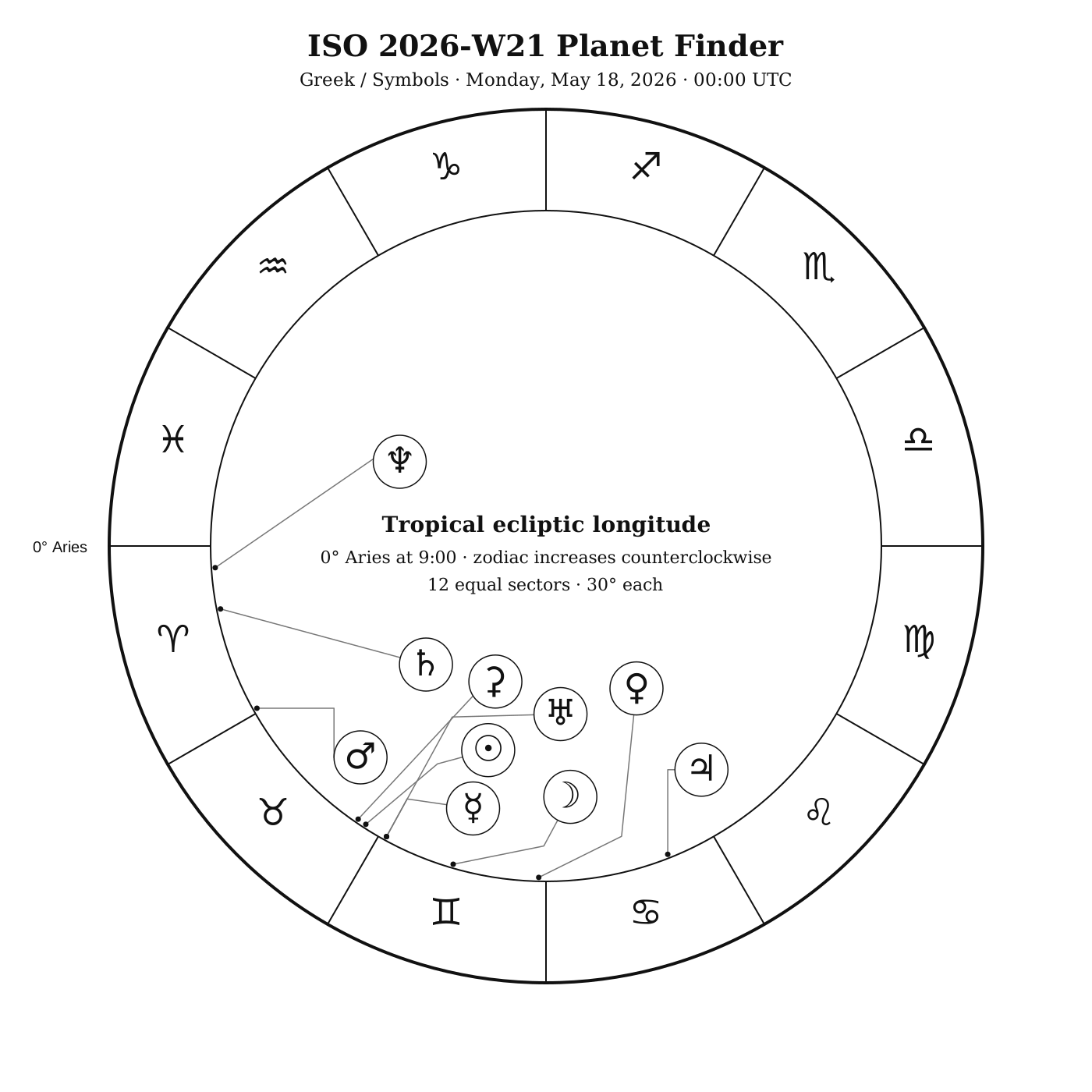
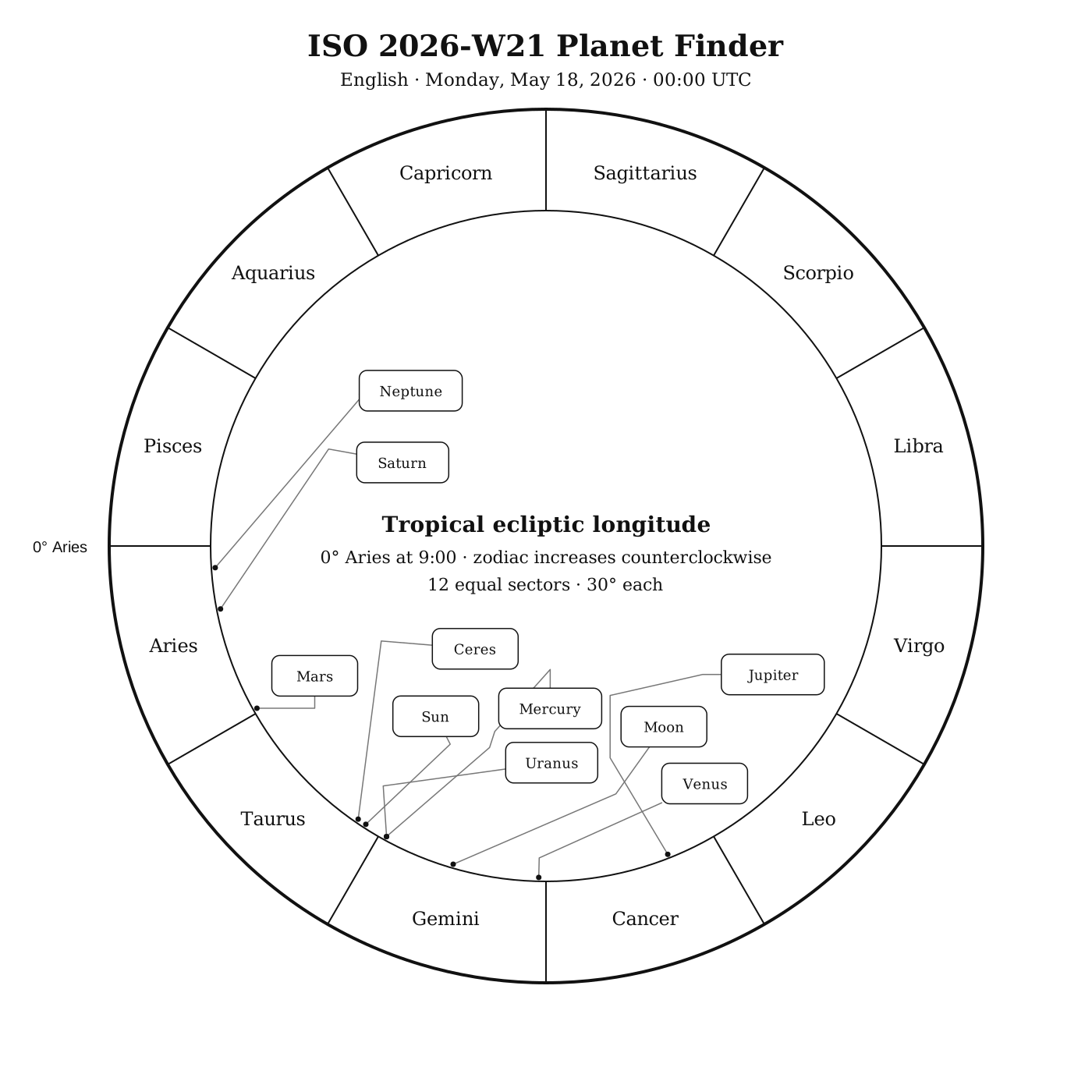
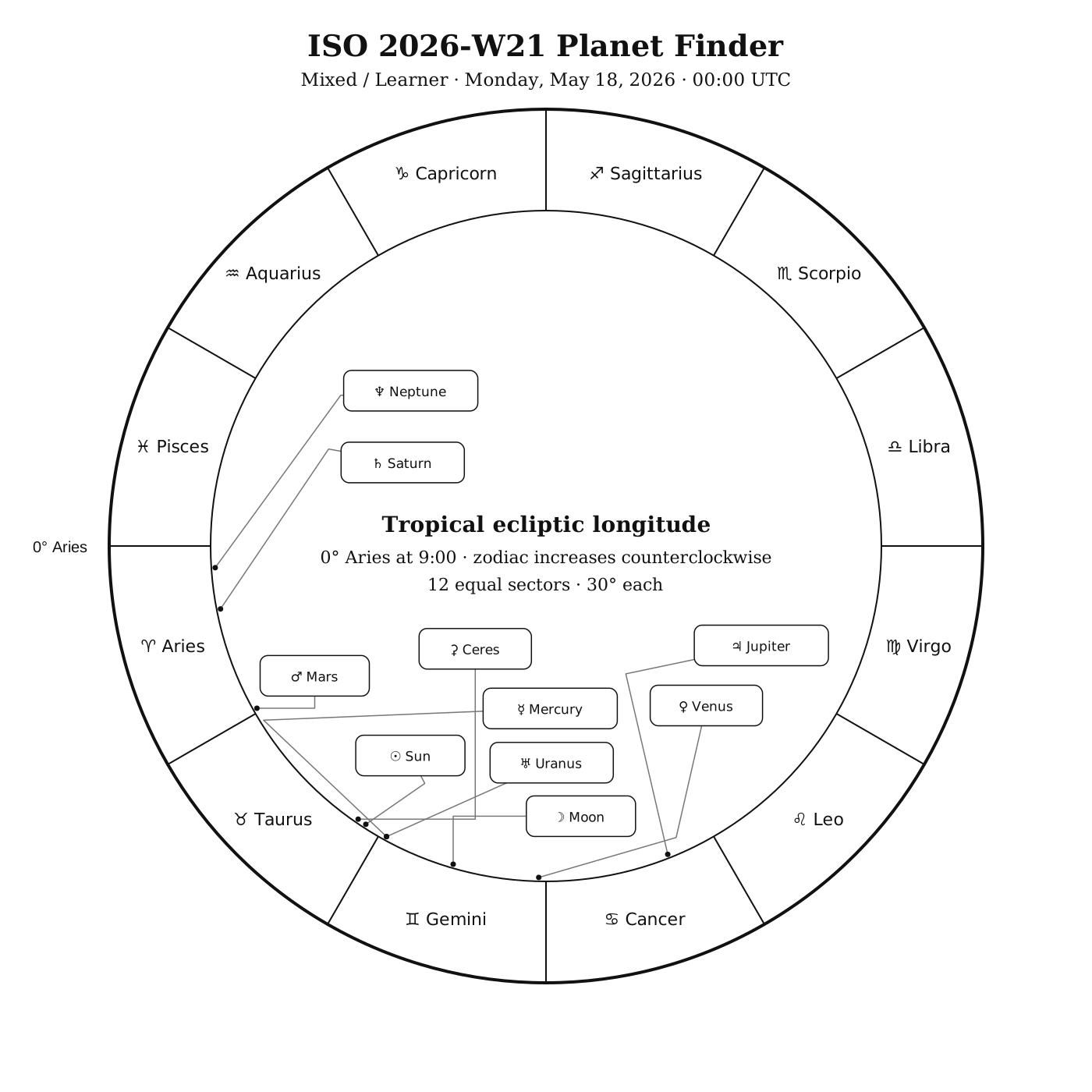
Sky Note
The spring galaxy sequence continues with M104, M58, M59, M60, M94, and M64, while First Quarter Moon arrives May 23. The Sombrero Galaxy is the week's most distinctive telescopic target, and Cor Caroli supplies an excellent bright-star anchor.
Naked eye: Identify Cor Caroli beneath the Big Dipper's handle and use the bright spring constellations to keep your bearings. Farther south, the Sombrero Galaxy (M104), spiral galaxy in Virgo field is lower for northern observers and benefits from a clear southern horizon.
Binoculars: Binoculars are most useful for navigation and for enjoying the broad Coma Berenices and Canes Venatici fields. Messier 94 (M94), spiral galaxy in Canes Venatici is among the more concentrated galaxies in this region but should still be treated as a dark-sky binocular challenge.
Small telescope: Sombrero Galaxy (M104), spiral galaxy in Virgo appears as a bright, flattened spindle with a strong central concentration; under favorable conditions its dark dust lane can begin to register. Messier 94 (M94), spiral galaxy in Canes Venatici has a compact bright center, while Black Eye Galaxy (M64), spiral galaxy in Coma Berenices is an oval glow whose famous dark feature requires good conditions and careful viewing.
What to expect: The names Sombrero and Black Eye come from structures made conspicuous in photographs. A small telescope usually reveals the galaxies first as gray forms; dust features are subtler second-stage observations rather than guaranteed first impressions.
Chart
ISO2026-W21-chart.png — chart slot.