ISO 2026-W34
Week begins: Monday, August 17, 2026
Calendar
| Date | Zodiac day | Events |
|---|---|---|
| Mon, Aug 17, 2026 | ♌ 27 | M26 —  8 8.0 — Tropical Summer 8 8.0 — Tropical Summerβ Sct —  4 4.2 — Tropical Summer 4 4.2 — Tropical Summer |
| Tue, Aug 18, 2026 | ♌ 28 | Sheliak (β Lyr) — 4 3.5 — Northern Summer — in the Milky WayM11 — 6 6.3 — Tropical Summer |
| Wed, Aug 19, 2026 | ♌ 29 | Finest NGC 94 / NGC 6712 — 8 8.1 — Tropical SummerM57 — 9 8.8 — Northern Summer |
| Thu, Aug 20, 2026 | ♌ 30 | 🌓 First Quarter — 02:46:21 UTC M54 — 8 7.6 — Southern SummerNunki (σ Sgr) —  2 2.1 — Southern Summer 2 2.1 — Southern Summer |
| Fri, Aug 21, 2026 | ♌ 31 | C68 / NGC 6729 · R Coronae Australis Nebula — 10 9.7 — Southern Summer |
| Sat, Aug 22, 2026 | ♌ 32 | |
| Sun, Aug 23, 2026 | ♍ 1 | ♍ Sun enters Virgo — 02:18:48 UTC Meridiana (α CrA) — 4 4.1 — Southern SummerC101 / NGC 6744 — 9 9.0 — Southern Summer |
Weekly Solar-System Ephemeris
Snapshot: Week begins August 17, 2026, 00:00 UTC.
(-90° to +90°; defaults +45°, 21:00 LAT)
| Body | ☉︎ | ☽︎ | ☿︎ | ♀︎ | ♂︎ | ♃︎ | ♄︎ |
|---|---|---|---|---|---|---|---|
| Ecliptic | ♌︎ 24°08′ β −0°00′ | ♎︎ 18°27′ β −3°58′ | ♌︎ 13°05′ β +1°15′ | ♎︎ 10°00′ β −1°36′ | ♋︎ 3°43′ β +0°19′ | ♌︎ 10°29′ β +0°30′ | ♈︎ 14°22′ β −2°36′ |
| Observing |  | -8.4 | ☉︎ | -4.4 | 1.3 | ☉︎ | 0.6 |
| Rise | 04:59 | 09:57 | 03:58 | 09:06 | 00:42 | 03:46 | 20:56 |
| Set | 19:01 | 20:36 | 18:38 | 20:31 | 16:18 | 18:27 | 09:27 |
Extended targets:
| Body | ⚳︎ | ♅︎ | ♆︎ | ♇︎ |
|---|---|---|---|---|
| Ecliptic | ♋︎ 1°36′ β −0°59′ | ♊︎ 5°26′ β −0°09′ | ♈︎ 4°00′ β −1°24′ | ♒︎ 3°49′ β −4°18′ |
| Observing | 9.0 | 5.7 | 7.7 | 14.5 |
| Rise | 00:40 | 22:54 | 20:27 | 18:23 |
| Set | 16:02 | 14:02 | 08:35 | 03:03 |
β = ecliptic latitude (+ north, − south).
Rise and set are Local Apparent Time for the selected latitude.
Naked-eye observing uses the Sun’s altitude at the selected Monday observer time: Daylight (Sun ≥ −0.833°), Civil twilight (−0.833° to −6°), Nautical twilight (−6° to −12°), Astronomical twilight (−12° to −18°), and Night (below −18°).
Solar Glare identifies a body too close to the Sun when the sky-state rule does not already supersede its naked-eye classification.
The Sun’s observing status uses this same five-state sky classification.
Planet Finder
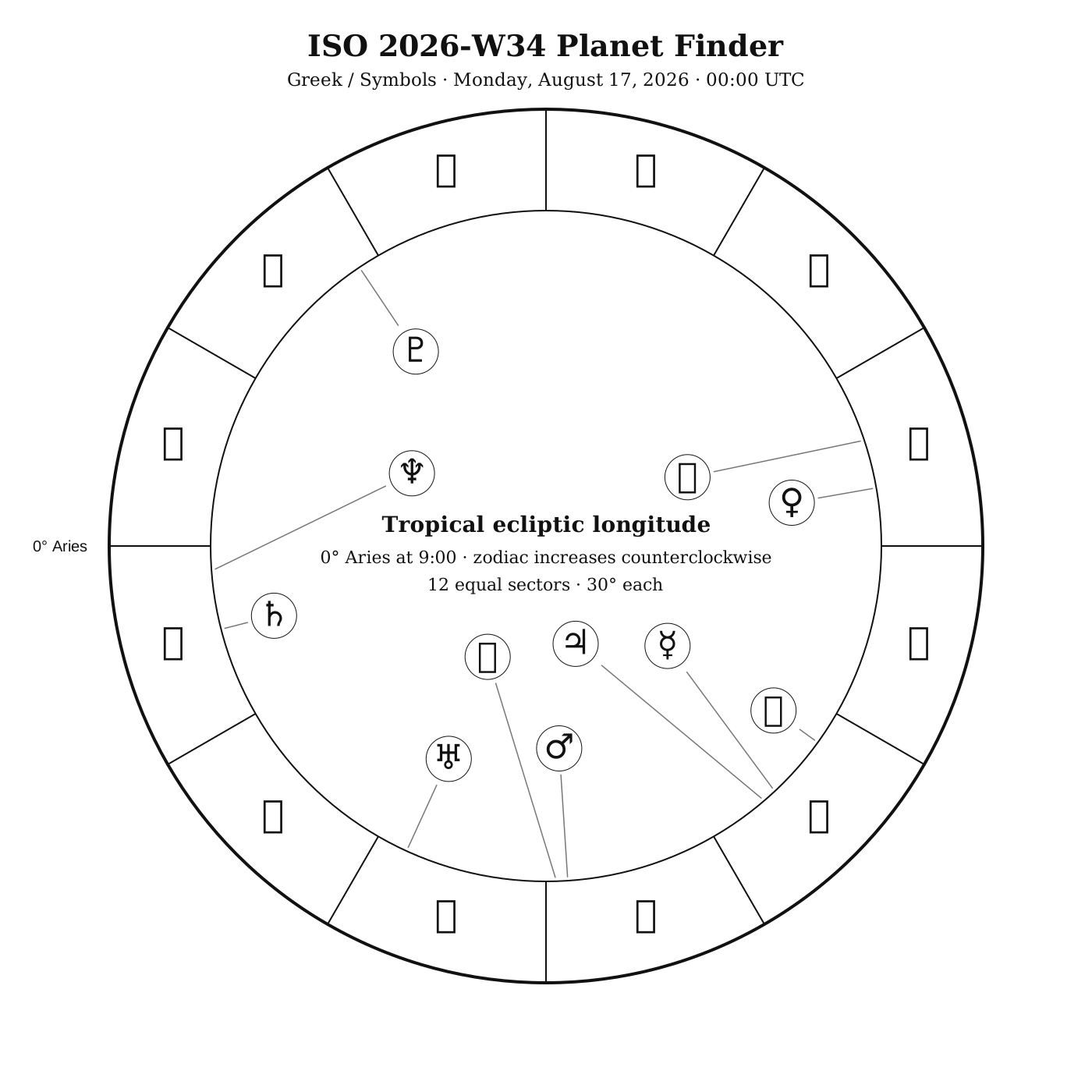
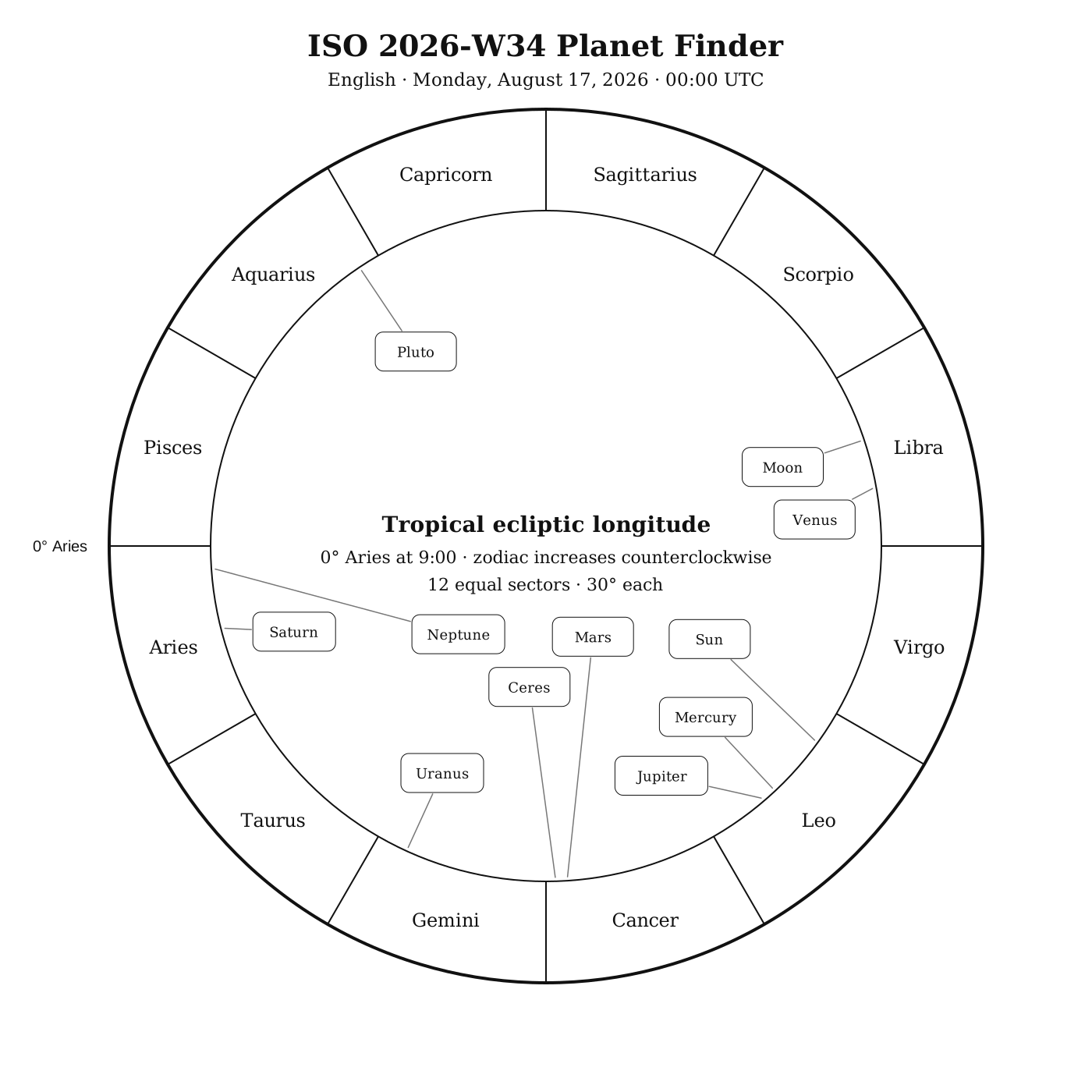
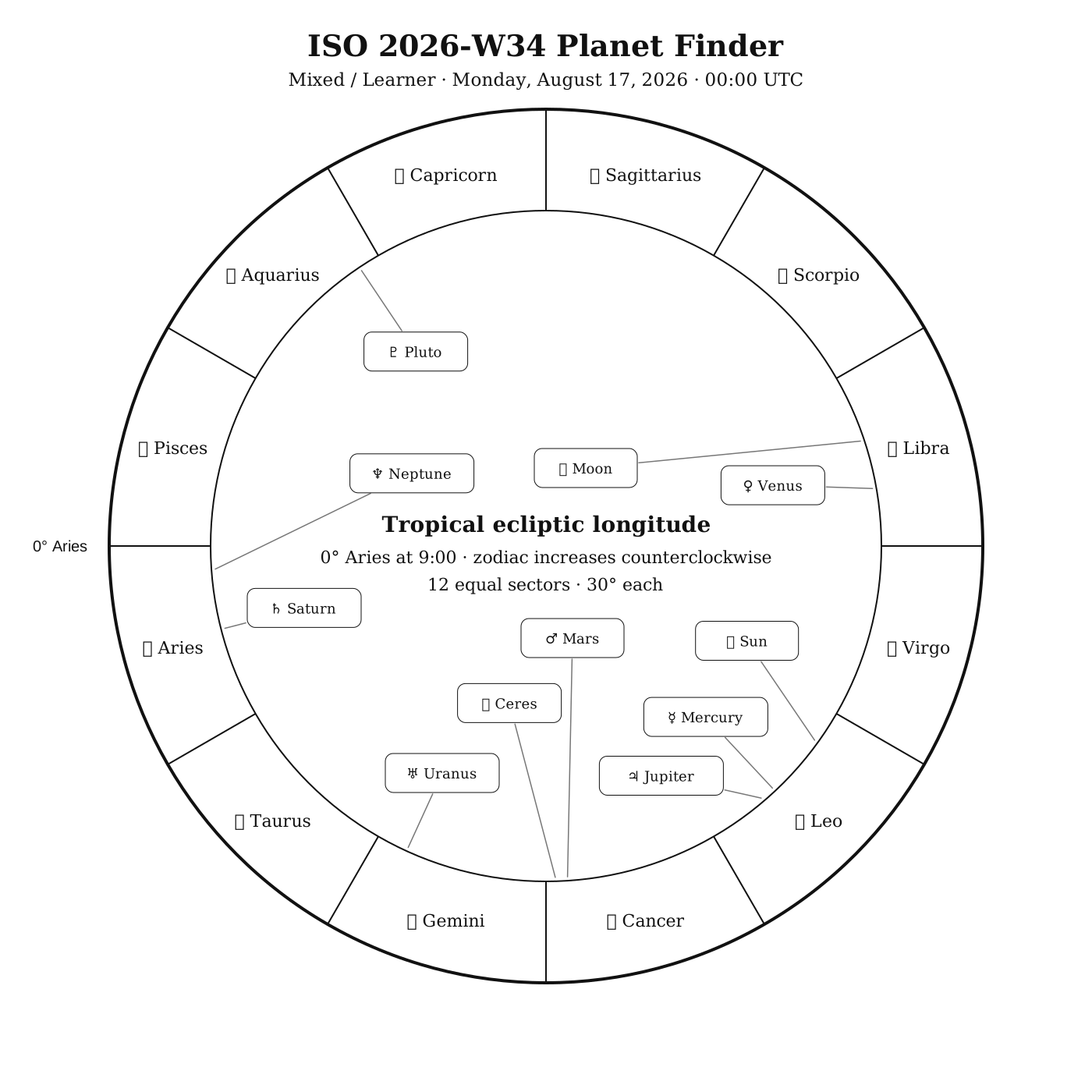
Sky Notes
Kilroy: Sky Notes · generated 2026-10-12 09:28:13 UTC
ISO 2026-W34 runs from August 17 through August 23. Mars and Ceres are separated by about 2.1° in geocentric ecliptic longitude at the Monday 00:00 UTC snapshot. Mercury and Jupiter are separated by about 2.6° in geocentric ecliptic longitude at the Monday 00:00 UTC snapshot.


Naked eye: 🌓 First Quarter — 02:46:21 UTC. Moderate moonlight makes timing and local sky position important for faint targets. Use Nunki as the week’s fixed-sky framework.
Planets: Moon: Naked eye; magnitude -8.4; direct motion; 21.0% illuminated. Below the horizon at 21:00 local apparent solar time, 45°N. Monday 00:00 UTC snapshot. Mercury: In solar glare; magnitude -1.4; direct motion; 88.8% illuminated. Monday 00:00 UTC snapshot. Venus: Naked eye; magnitude -4.4; direct motion; 47.8% illuminated. Below the horizon at 21:00 local apparent solar time, 45°N. Monday 00:00 UTC snapshot. Mars: Naked eye; magnitude 1.3; direct motion; 92.7% illuminated. Below the horizon at 21:00 local apparent solar time, 45°N. Monday 00:00 UTC snapshot. Ceres: Telescope; magnitude 9.0; direct motion; 97.7% illuminated. Below the horizon at 21:00 local apparent solar time, 45°N. Monday 00:00 UTC snapshot. Jupiter: In solar glare; magnitude -1.8; direct motion; 99.9% illuminated. Monday 00:00 UTC snapshot. Saturn: Naked eye; magnitude 0.6; retrograde motion; 99.8% illuminated. Monday 00:00 UTC snapshot. Uranus: Binoculars; magnitude 5.7; direct motion; 99.9% illuminated. Below the horizon at 21:00 local apparent solar time, 45°N. Monday 00:00 UTC snapshot. Neptune: Telescope; magnitude 7.7; retrograde motion; 100.0% illuminated. Monday 00:00 UTC snapshot. Pluto: Substantial telescope; magnitude 14.5; retrograde motion; 100.0% illuminated. Monday 00:00 UTC snapshot.


Binoculars: Trace the charted figure of Sct, then identify β Sct at its plotted position. Trace the charted figure of Lyr, then identify Sheliak at its plotted position. Trace the charted figure of CrA, then identify Alfecca Meridiana at its plotted position.
Small telescope: M26: consult its dedicated finder and observing story for equipment guidance; Wild Duck Cluster: consult its dedicated finder and observing story for equipment guidance; NGC 6712: consult its dedicated finder and observing story for equipment guidance; Ring Nebula: consult its dedicated finder and observing story for equipment guidance; M54: consult its dedicated finder and observing story for equipment guidance; R Coronae Australis Nebula: consult its dedicated finder and observing story for equipment guidance; NGC 6744: consult its dedicated finder and observing story for equipment guidance
Substantial telescope: No fixed-sky Calendar object is classified as requiring a substantial telescope this week.
Other objects listed this week: None
Mercury
Mercury: in solar glare at the Monday 00:00 UTC snapshot. Rises 03:58; sets 18:38 (45°N, local apparent solar time). Visual magnitude -1.4. The disk is 88.8% illuminated (gibbous). It is 11.1° from the Sun, on its west side. Motion is direct at 1.949° per day in ecliptic longitude at the snapshot. Position reference: Acubens, 6.4° away. Jupiter is 2.7° away at the snapshot. Mercury: 6.4° from Acubens in the Pathfinder.
Venus
Venus: naked eye at the Monday 00:00 UTC snapshot. At 45°N and 21:00 local apparent solar time, it is 5.8° below the horizon. Rises 09:06; sets 20:31 (45°N, local apparent solar time). Visual magnitude -4.4. The disk is 47.8% illuminated (crescent). It is 45.9° from the Sun, on its east side. Motion is direct at 0.946° per day in ecliptic longitude at the snapshot. Position reference: Zavijava, 12.7° away. Venus: 12.7° from Zavijava in the Pathfinder.
Moon
Moon: naked eye at the Monday 00:00 UTC snapshot. At 45°N and 21:00 local apparent solar time, it is 4.7° below the horizon. Rises 09:57; sets 20:36 (45°N, local apparent solar time). Visual magnitude -8.4. The disk is 21.0% illuminated (waxing crescent). It is 54.4° from the Sun, on its east side. Motion is direct at 12.889° per day in ecliptic longitude at the snapshot. Position reference: Spica, 6.1° away. Moon: 6.1° from Spica in the Pathfinder.
Mars
Mars: naked eye at the Monday 00:00 UTC snapshot. At 45°N and 21:00 local apparent solar time, it is 21.0° below the horizon. Rises 00:42; sets 16:18 (45°N, local apparent solar time). Visual magnitude 1.3. The disk is 92.7% illuminated (gibbous). It is 50.4° from the Sun, on its west side. Motion is direct at 0.655° per day in ecliptic longitude at the snapshot. Position reference: Alhena, 9.1° away. Ceres is 2.5° away at the snapshot. Mars: 9.1° from Alhena in the Pathfinder.
Jupiter
Jupiter: in solar glare at the Monday 00:00 UTC snapshot. Rises 03:46; sets 18:27 (45°N, local apparent solar time). Visual magnitude -1.8. The disk is 99.9% illuminated (nearly full). It is 13.7° from the Sun, on its west side. Motion is direct at 0.218° per day in ecliptic longitude at the snapshot. Position reference: Acubens, 6.6° away. Mercury is 2.7° away at the snapshot. Jupiter: 6.6° from Acubens in the Pathfinder.
Saturn
Saturn: naked eye at the Monday 00:00 UTC snapshot. At 45°N and 21:00 local apparent solar time, it is 0.2° above the horizon. Rises 20:56; sets 09:27 (45°N, local apparent solar time). Visual magnitude 0.6. The disk is 99.8% illuminated (nearly full). It is 129.7° from the Sun, on its west side. Motion is retrograde at 0.035° per day in ecliptic longitude at the snapshot. Position reference: Alrescha, 16.6° away. Saturn: 16.6° from Alrescha in the Pathfinder.
Uranus
Uranus: binoculars at the Monday 00:00 UTC snapshot. At 45°N and 21:00 local apparent solar time, it is 15.5° below the horizon. Rises 22:54; sets 14:02 (45°N, local apparent solar time). Visual magnitude 5.7. The disk is 99.9% illuminated (nearly full). It is 78.7° from the Sun, on its west side. Motion is direct at 0.021° per day in ecliptic longitude at the snapshot. Position reference: Aldebaran, 7.1° away. Uranus: 7.1° from Aldebaran in the Pathfinder.
Neptune
Neptune: telescope at the Monday 00:00 UTC snapshot. At 45°N and 21:00 local apparent solar time, it is 5.2° above the horizon. Rises 20:27; sets 08:35 (45°N, local apparent solar time). Visual magnitude 7.7. The disk is 100.0% illuminated (nearly full). It is 140.1° from the Sun, on its west side. Motion is retrograde at 0.020° per day in ecliptic longitude at the snapshot. Position reference: Fumalsamakah, 18.3° away. Neptune: 18.3° from Fumalsamakah in the Pathfinder.
Ceres
Ceres: telescope at the Monday 00:00 UTC snapshot. At 45°N and 21:00 local apparent solar time, it is 22.0° below the horizon. Rises 00:40; sets 16:02 (45°N, local apparent solar time). Visual magnitude 9.0. The disk is 97.7% illuminated (gibbous). It is 52.5° from the Sun, on its west side. Motion is direct at 0.363° per day in ecliptic longitude at the snapshot. Position reference: Alhena, 9.7° away. Mars is 2.5° away at the snapshot. Ceres: 9.7° from Alhena in the Pathfinder.
Pluto
Pluto: substantial telescope at the Monday 00:00 UTC snapshot. At 45°N and 21:00 local apparent solar time, it is 17.5° above the horizon. Rises 18:23; sets 03:03 (45°N, local apparent solar time). Visual magnitude 14.5. The disk is 100.0% illuminated (nearly full). It is 159.3° from the Sun, on its east side. Motion is retrograde at 0.022° per day in ecliptic longitude at the snapshot. Position reference: Dabih, 8.9° away. Pluto: 8.9° from Dabih in the Pathfinder.
Highlights
Mercury
In solar glare; magnitude -1.4; direct motion; 88.8% illuminated. Monday 00:00 UTC snapshot. Mercury: 6.4° from Acubens in the Pathfinder.
Venus
Naked eye; magnitude -4.4; direct motion; 47.8% illuminated. Below the horizon at 21:00 local apparent solar time, 45°N. Monday 00:00 UTC snapshot. Venus: 12.7° from Zavijava in the Pathfinder.
Moon
Naked eye; magnitude -8.4; direct motion; 21.0% illuminated. Below the horizon at 21:00 local apparent solar time, 45°N. Monday 00:00 UTC snapshot. Moon: 6.1° from Spica in the Pathfinder.
Mars
Naked eye; magnitude 1.3; direct motion; 92.7% illuminated. Below the horizon at 21:00 local apparent solar time, 45°N. Monday 00:00 UTC snapshot. Mars: 9.1° from Alhena in the Pathfinder.
Jupiter
In solar glare; magnitude -1.8; direct motion; 99.9% illuminated. Monday 00:00 UTC snapshot. Jupiter: 6.6° from Acubens in the Pathfinder.
Saturn
Naked eye; magnitude 0.6; retrograde motion; 99.8% illuminated. Monday 00:00 UTC snapshot. Saturn: 16.6° from Alrescha in the Pathfinder.
Uranus
Binoculars; magnitude 5.7; direct motion; 99.9% illuminated. Below the horizon at 21:00 local apparent solar time, 45°N. Monday 00:00 UTC snapshot. Uranus: 7.1° from Aldebaran in the Pathfinder.
Neptune
Telescope; magnitude 7.7; retrograde motion; 100.0% illuminated. Monday 00:00 UTC snapshot. Neptune: 18.3° from Fumalsamakah in the Pathfinder.
Ceres
Telescope; magnitude 9.0; direct motion; 97.7% illuminated. Below the horizon at 21:00 local apparent solar time, 45°N. Monday 00:00 UTC snapshot. Ceres: 9.7° from Alhena in the Pathfinder.
Pluto
Substantial telescope; magnitude 14.5; retrograde motion; 100.0% illuminated. Monday 00:00 UTC snapshot. Pluto: 8.9° from Dabih in the Pathfinder.