ISO 2026-W52
ISO dates: 2026-W52-1 through 2026-W52-7
Civil dates: Dec 21, 2026 – Dec 27, 2026
Calendar
| Date | Zodiac day | Events |
|---|---|---|
| Mon, Dec 21, 2026 | ♑ 1 | ♑ Sun enters Capricorn · Winter solstice · Yule — 20:50:14 UTC |
| Tue, Dec 22, 2026 | ♑ 2 |  Ursids peak · radiant in Ursa Minor · expected ZHR ≈ 10 · Moon 97% illuminated: strong moonlight interference · Use a dark site, allow 20–30 minutes for dark adaptation, and observe with the unaided eye. Put the Moon behind a building, tree, or other obstruction and watch the darkest open sky. Ursids peak · radiant in Ursa Minor · expected ZHR ≈ 10 · Moon 97% illuminated: strong moonlight interference · Use a dark site, allow 20–30 minutes for dark adaptation, and observe with the unaided eye. Put the Moon behind a building, tree, or other obstruction and watch the darkest open sky.β Hor —  5 5.0 — Southern Winter 5 5.0 — Southern WinterMenkar (α Cet) —  3 2.5 — Tropical Winter 3 2.5 — Tropical Winter |
| Wed, Dec 23, 2026 | ♑ 3 | |
| Thu, Dec 24, 2026 | ♑ 4 | NGC 1232, galaxy in Eridanus —  V 10.6 — Finest NGC — Tropical Winter V 10.6 — Finest NGC — Tropical Winter🌕 Full Moon · Moon After Yule — 01:28:14 UTC Algol (β Per) / Algol (β Persei) — Var 2 2.1 2.1–3.4 — Northern WinterFinest NGC 21 / NGC 1232 · Arp 41 — 11 10.6 — Tropical WinterFinest NGC 10 / IC 289 · PN G138.8+02.8 — 12 12.0 — Northern Winter |
| Fri, Dec 25, 2026 | ♑ 5 | C87, NGC 1261, globular cluster in Horologium — V 8.4 — Southern WinterDalim (α For) — 4 3.8 — Southern WinterC87 / NGC 1261 — 8 8.4 — Southern Winter |
| Sat, Dec 26, 2026 | ♑ 6 | Horologium center — Constellation — V 5.2 — Southern WinterC24 / NGC 1275 · Perseus A — 12 11.6 — Northern Winter |
| Sun, Dec 27, 2026 | ♑ 7 | Mirfak (α Per) — 2 1.8 — Northern Winter — in the Milky Way |
Weekly Solar-System Ephemeris
Snapshot: December 21, 2026 · 00:00 UTC
Naked Eye
| ☉︎ Sun | ☽︎ Moon | ☿︎ Mercury | ♀︎ Venus | ♂︎ Mars | ♃︎ Jupiter | ♄︎ Saturn |
|---|---|---|---|---|---|---|
| ♐︎ 29°07′ β +0°00′ | ♉︎ 16°16′ β +5°05′ | ♐︎ 22°32′ β −0°47′ | ♏︎ 13°01′ β +3°08′ | ♍︎ 7°59′ β +2°54′ | ♌︎ 26°55′ β +0°53′ | ♈︎ 8°01′ β −2°30′ |
| Observing | ||||||
| ☉ | | ☉ | | | | |
Extended targets:
| ⚳︎ Ceres | ♅︎ Uranus | ♆︎ Neptune | ♇︎ Pluto |
|---|---|---|---|
| ♋︎ 21°07′ β +6°21′ | ♊︎ 2°40′ β −0°09′ | ♈︎ 1°38′ β −1°23′ | ♒︎ 4°02′ β −4°15′ |
| Observing | |||
| | | |
β = ecliptic latitude (+ north, − south). Observing combines visual magnitude with solar elongation. Two telescope glyphs = substantial telescope. ☉ = Near Sun — not currently observable.
Planet Finder
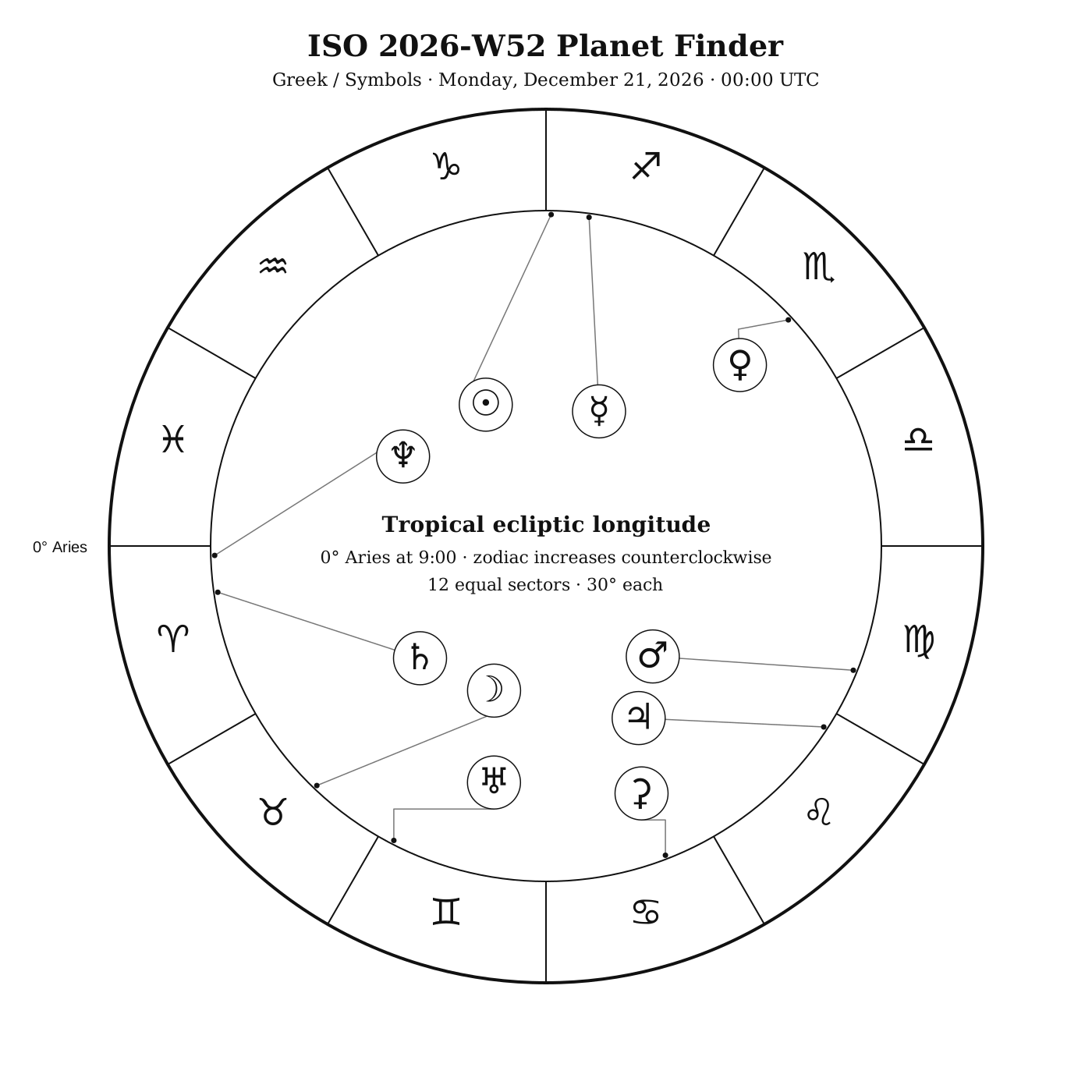
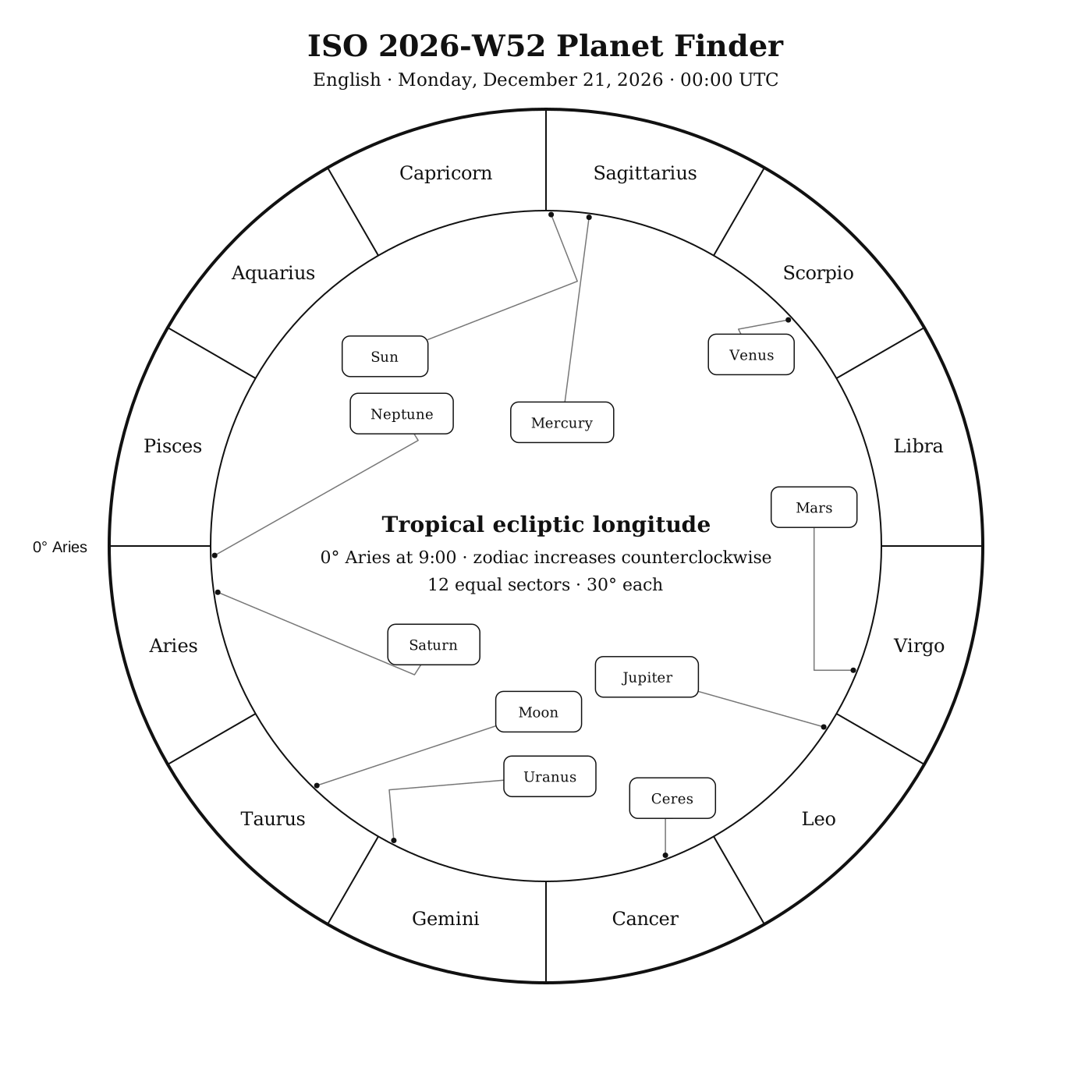
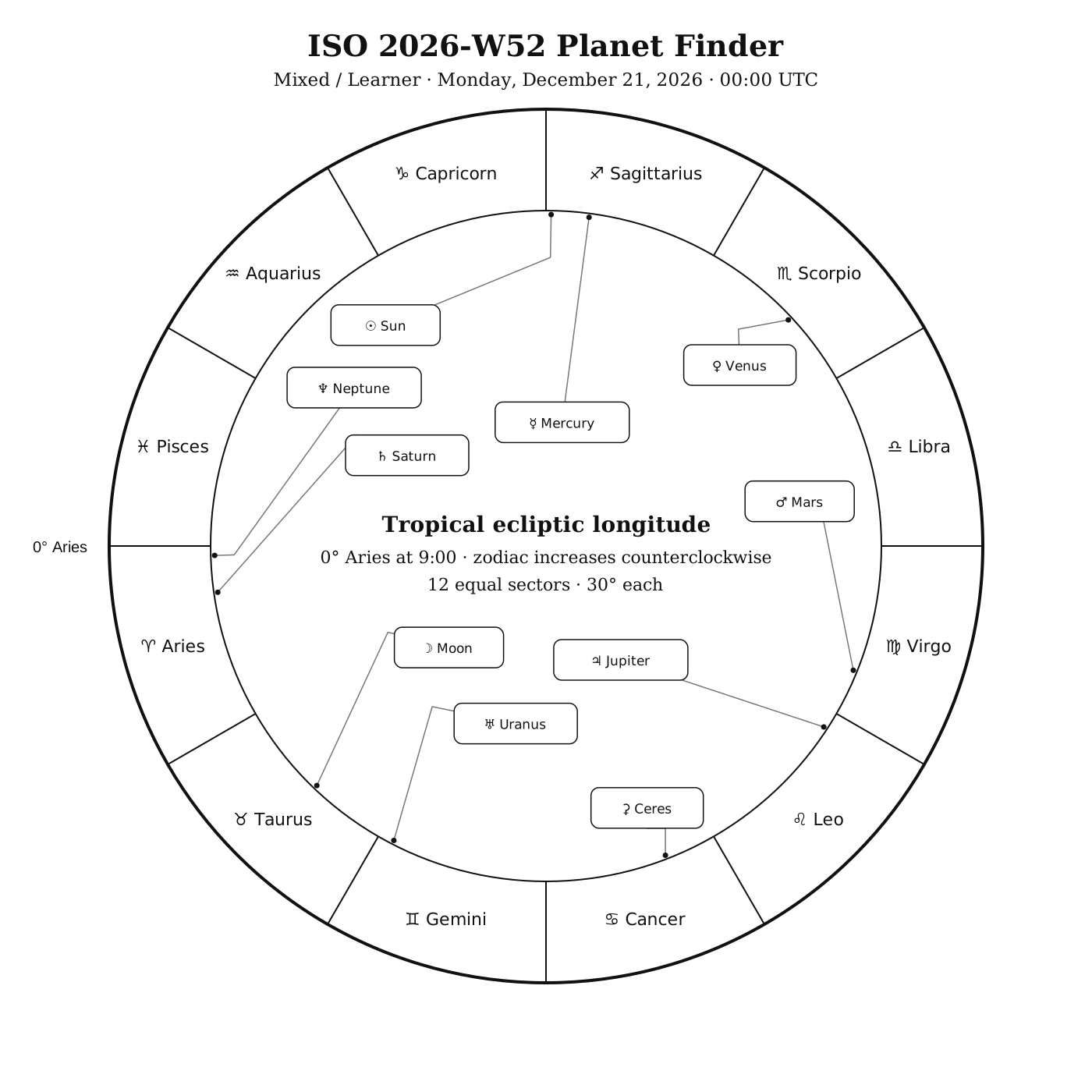
Sky Note
The week begins with the December solstice season and reaches Full Moon on Thursday, December 24. Moonlight will limit faint deep-sky work, but the bright winter constellations provide excellent naked-eye structure and the Moon itself becomes the natural telescopic target.
Naked eye: Compare the long winter night with the brilliant seasonal star patterns. Orion, Taurus, Auriga, and Gemini are increasingly well placed in the evening while Perseus remains high in northern skies. Bright moonlight reduces the number of faint stars but leaves the principal constellation shapes easy to follow.
Binoculars: Use binoculars on broad stellar groupings and the Moon. The lunar disk is intensely bright, so prolonged binocular viewing can be uncomfortable; observe briefly and never use optical instruments on the Sun. Star clusters remain better choices than low-surface-brightness galaxies under the bright sky.
Small telescope: The nearly full Moon shows bright ray systems and large-scale albedo patterns well, although low Sun angles near the terminator usually reveal topographic relief more dramatically than Full Moon does. Bright double stars and compact clusters are also resilient targets.
What to expect: Full Moon is poor for faint galaxies but excellent for understanding how observing conditions select the target. A successful session is not measured by how faint an object you can force through the glare; it is measured by choosing something the sky is ready to show.
Meteor shower: The Ursids peak on December 22 near 22:00 UT. A nearly full Moon makes the 2026 return difficult for visual observing.
Chart
ISO2026-W52-chart.png — chart slot.