ISO 2026-W25
ISO dates: 2026-W25-1 through 2026-W25-7
Civil dates: Jun 15, 2026 – Jun 21, 2026
Calendar
| Date | Zodiac day | Events |
|---|---|---|
| Mon, Jun 15, 2026 | ♊ 26 | Boötes center — Constellation —  V 3.5 — Northern Spring V 3.5 — Northern SpringUrsa Minor center — Constellation — V 4.2 — Arctic Spring🌑 New Moon — 02:54:10 UTC η Cen —  Var 2 2.3 2.3–2.5 — Southern Spring Var 2 2.3 2.3–2.5 — Southern Spring |
| Tue, Jun 16, 2026 | ♊ 27 | C66, NGC 5694, globular cluster in Hydra —  V 10.2 — Southern Spring V 10.2 — Southern SpringC66 / NGC 5694 — 10 10.2 — Southern SpringRigil Kentaurus (α Cen) — 0 -0.0 — Southern Spring |
| Wed, Jun 17, 2026 | ♊ 28 | α Lup — Var 2 2.3 2.29–2.34 — Southern Springα Cir — 3 3.2 — Southern Spring |
| Thu, Jun 18, 2026 | ♊ 29 | NGC 5746, galaxy in Virgo — V 11.4 — Finest NGC — Tropical SpringFinest NGC 85 / NGC 5746 · MCG 0-38-5 — 11 11.4 — Tropical SpringIzar (ε Boo) — 2 2.4 — Northern Springα Aps — 4 3.8 — Antarctic Spring |
| Fri, Jun 19, 2026 | ♊ 30 | Circinus center — Constellation — V 4.1 — Southern Springα1 Lib — 5 5.2 — Tropical SpringKochab (β UMi) — 2 2.1 — Arctic SpringZubenelgenubi (α2 Lib) — 3 2.7 — Tropical Spring |
| Sat, Jun 20, 2026 | ♊ 31 | |
| Sun, Jun 21, 2026 | ♋ 1 | ♋ Sun enters Cancer · Summer solstice · Litha — 08:24:30 UTC 🌓 First Quarter — 21:55:25 UTC β Lup — 3 2.7 — Southern Summer |
Weekly Solar-System Ephemeris
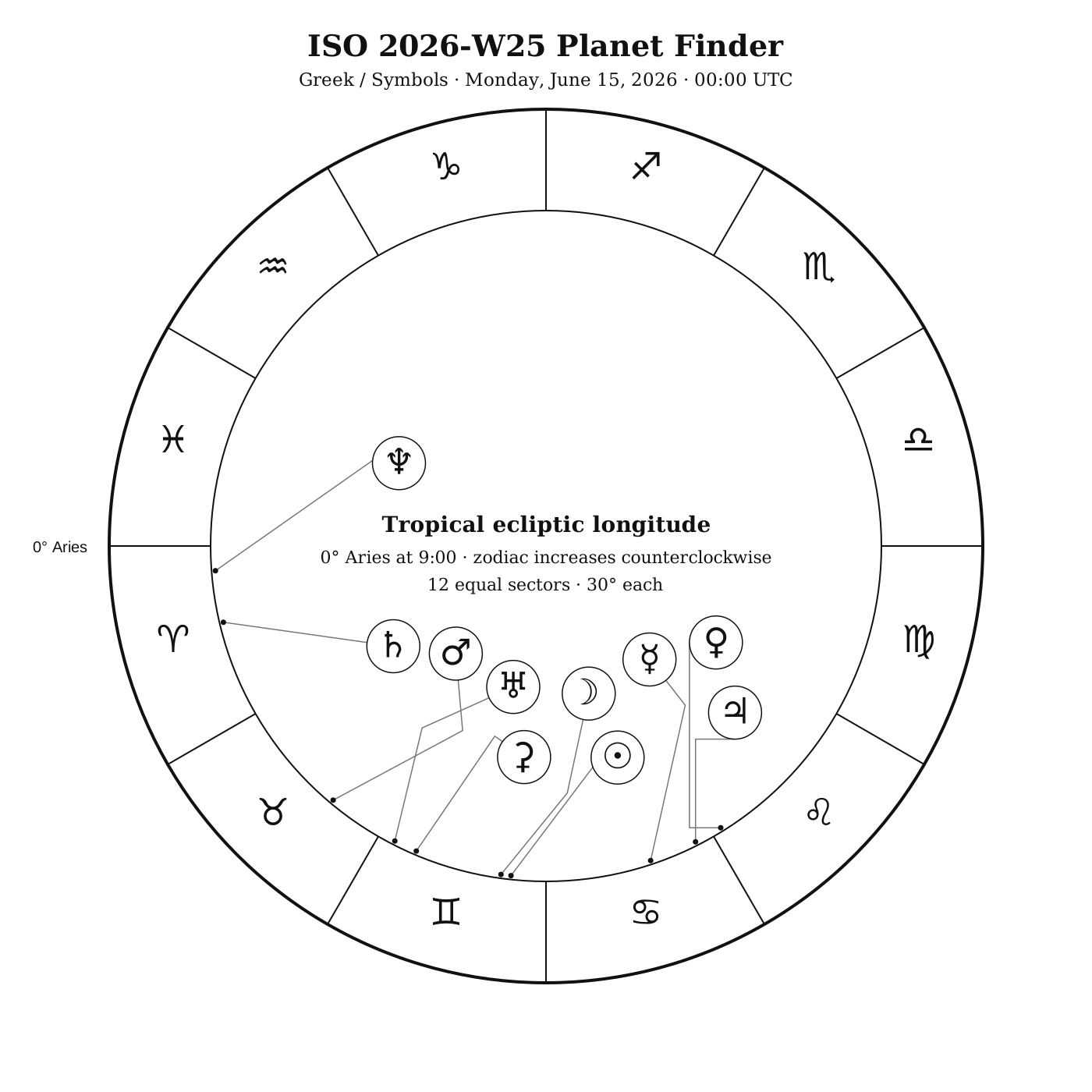
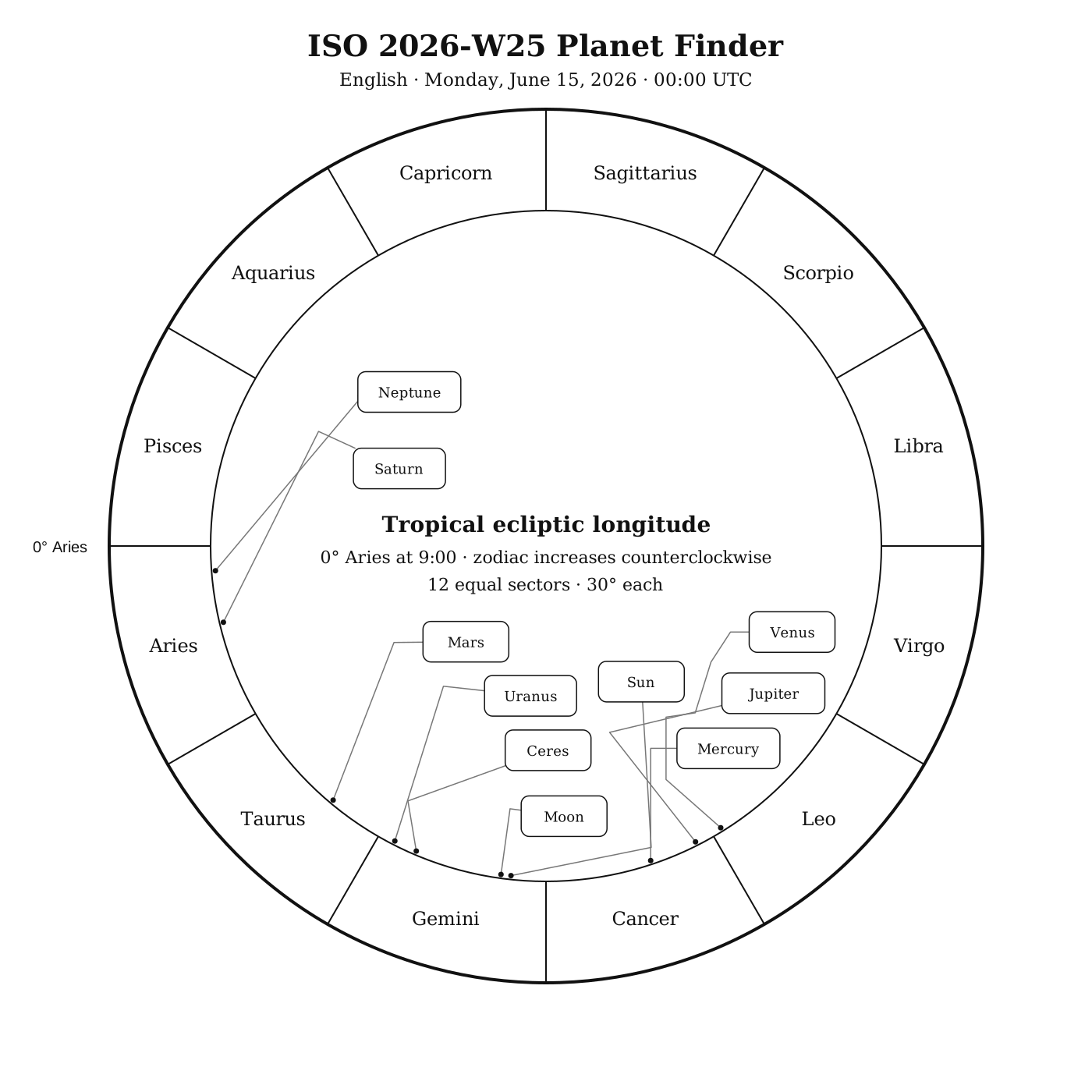
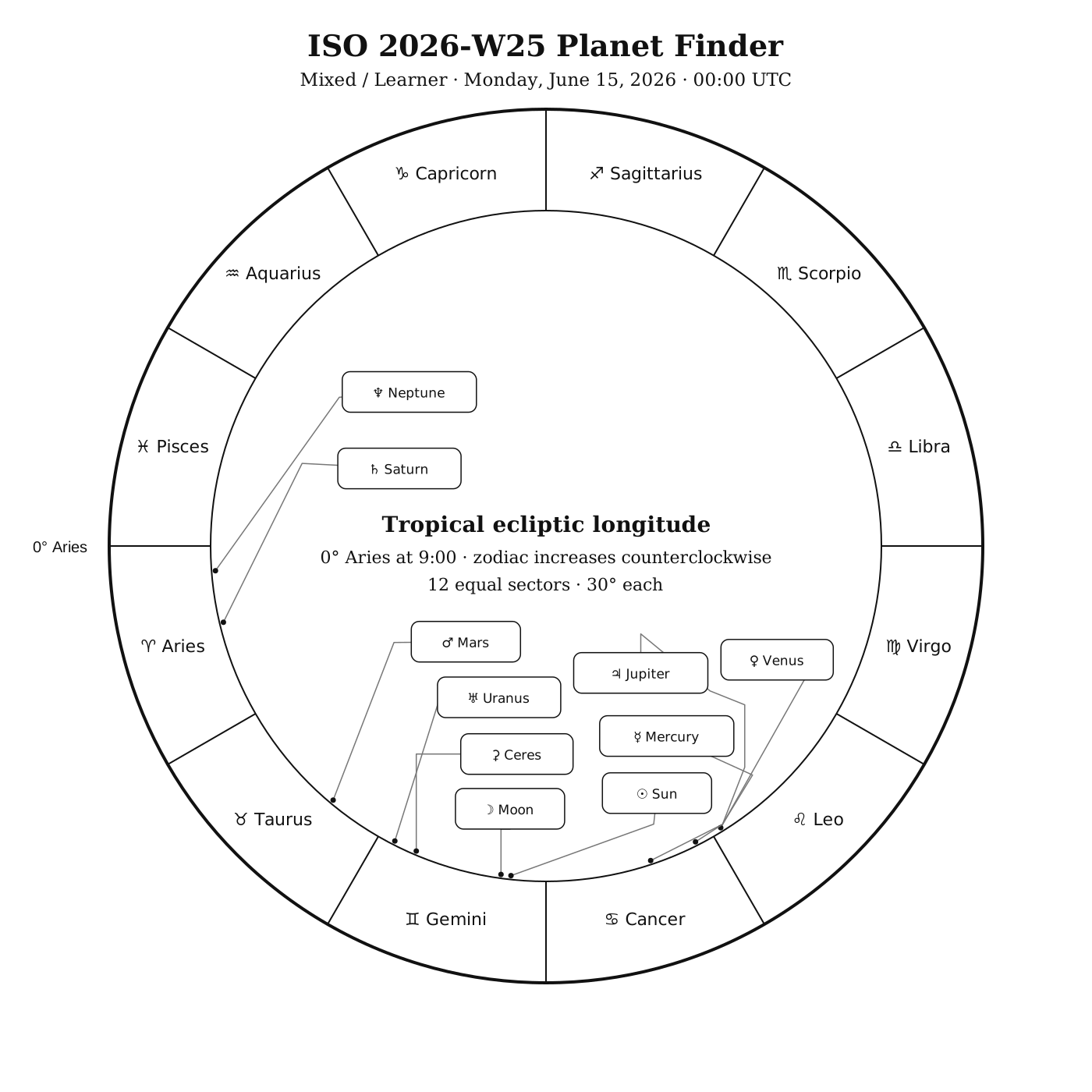
Snapshot: June 15, 2026 · 00:00 UTC
Naked Eye
| ☉︎ Sun | ☽︎ Moon | ☿︎ Mercury | ♀︎ Venus | ♂︎ Mars | ♃︎ Jupiter | ♄︎ Saturn |
|---|---|---|---|---|---|---|
| ♊︎ 23°56′ β +0°00′ | ♊︎ 22°12′ β +4°44′ | ♋︎ 18°24′ β +1°09′ | ♌︎ 1°48′ β +2°02′ | ♉︎ 20°03′ β −0°29′ | ♋︎ 26°49′ β +0°25′ | ♈︎ 13°18′ β −2°19′ |
| Observing | ||||||
| ☉ | ☉ | | | | | |
Extended targets:
| ⚳︎ Ceres | ♅︎ Uranus | ♆︎ Neptune | ♇︎ Pluto |
|---|---|---|---|
| ♊︎ 6°58′ β −2°42′ | ♊︎ 2°52′ β −0°09′ | ♈︎ 4°17′ β −1°21′ | ♒︎ 5°10′ β −4°11′ |
| Observing | |||
| ☉ | | | |
β = ecliptic latitude (+ north, − south). Observing combines visual magnitude with solar elongation. Two telescope glyphs = substantial telescope. ☉ = Near Sun — not currently observable.
Planet Finder
Sky Note
New Moon opens the week, Alpha Centauri reaches its Almanack date on June 16, and the June solstice follows on June 21. This is a strong orientation week linking the seasonal turning point with conspicuous northern and southern sky markers.
Naked eye: From sufficiently southerly latitudes, Alpha Centauri is one of the brightest stars in the sky and an unmistakable southern landmark. Northern observers should instead use Arcturus, the Big Dipper, and the rising summer constellations to follow the seasonal transition.
Binoculars: Sweep the rich southern Milky Way around Centaurus if it is accessible from your latitude. In northern skies, binoculars are excellent for following the growing summer Milky Way as darkness arrives later in the evening.
Small telescope: Izar in Boötes is a worthwhile double-star target when seeing is steady. Center it at low power and increase magnification gradually rather than assuming maximum power will give the best view.
What to expect: The solstice is a geometric turning point in the Sun's annual path, not a sudden change in the stars. The practical observing effect is seasonal: long northern evenings compress the darkest observing window while southern winter nights lengthen.
Chart
ISO2026-W25-chart.png — chart slot.