ISO 2026-W28
ISO dates: 2026-W28-1 through 2026-W28-7
Civil dates: Jul 6, 2026 – Jul 12, 2026
Calendar
| Date | Zodiac day | Events |
|---|---|---|
| Mon, Jul 6, 2026 | ♋ 16 | Dschubba (δ Sco) —  Var 2 2.3 1.9–2.3 — Tropical Summer Var 2 2.3 1.9–2.3 — Tropical Summer |
| Tue, Jul 7, 2026 | ♋ 17 | Norma center — Constellation —  V 4.6 — Southern Summer V 4.6 — Southern SummerTriangulum Australe center — Constellation — V 2.9 — Southern SummerC95, NGC 6025, open cluster in Triangulum Australe — V 5.1 — Southern Summer🌗 Last Quarter — 19:28:59 UTC C95 / NGC 6025 —  5 5.1 — Southern Summer 5 5.1 — Southern SummerAcrab (β1 Sco) — 3 2.6 — Tropical Summerβ2 Sco — 5 4.9 — Tropical Summer |
| Wed, Jul 8, 2026 | ♋ 18 | |
| Thu, Jul 9, 2026 | ♋ 19 | |
| Fri, Jul 10, 2026 | ♋ 20 | Apus center — Constellation — V 4.0 — Antarctic SummerM80 — 7 7.3 — Tropical SummerC89 / NGC 6087 · S Normae Cluster — 5 5.4 — Southern Summer |
| Sat, Jul 11, 2026 | ♋ 21 | Scorpius's Fishhook center — Asterism — V 1.1 — Southern Summer |
| Sun, Jul 12, 2026 | ♋ 22 | C75, NGC 6124, open cluster in Scorpius — V 5.8 — Southern SummerC107, NGC 6101, globular cluster in Apus — V 9.3 — Antarctic SummerM4 — 6 5.6 — Southern SummerC75 / NGC 6124 — 6 5.8 — Southern SummerC107 / NGC 6101 — 9 9.3 — Antarctic Summer |
Weekly Solar-System Ephemeris
Snapshot: July 6, 2026 · 00:00 UTC
Naked Eye
| ☉︎ Sun | ☽︎ Moon | ☿︎ Mercury | ♀︎ Venus | ♂︎ Mars | ♃︎ Jupiter | ♄︎ Saturn |
|---|---|---|---|---|---|---|
| ♋︎ 13°58′ β +0°00′ | ♓︎ 21°50′ β +1°52′ | ♋︎ 24°49′ β −3°45′ | ♌︎ 25°50′ β +1°36′ | ♊︎ 5°06′ β −0°14′ | ♌︎ 1°14′ β +0°27′ | ♈︎ 14°23′ β −2°24′ |
| Observing | ||||||
| ☉ | | ☉ | | | ☉ | |
Extended targets:
| ⚳︎ Ceres | ♅︎ Uranus | ♆︎ Neptune | ♇︎ Pluto |
|---|---|---|---|
| ♊︎ 15°27′ β −2°10′ | ♊︎ 3°57′ β −0°09′ | ♈︎ 4°25′ β −1°22′ | ♒︎ 4°46′ β −4°14′ |
| Observing | |||
| | | |
β = ecliptic latitude (+ north, − south). Observing combines visual magnitude with solar elongation. Two telescope glyphs = substantial telescope. ☉ = Near Sun — not currently observable.
Planet Finder
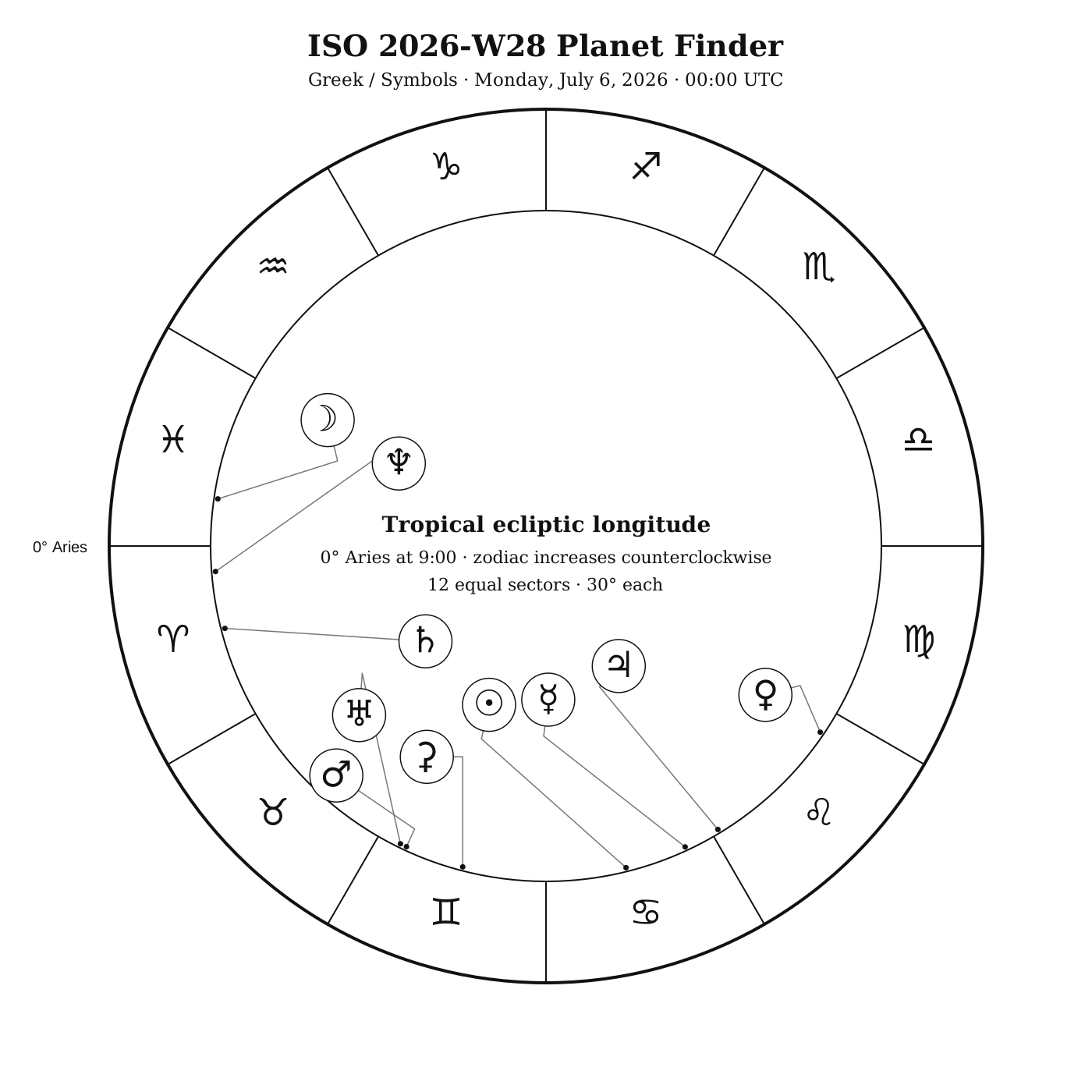
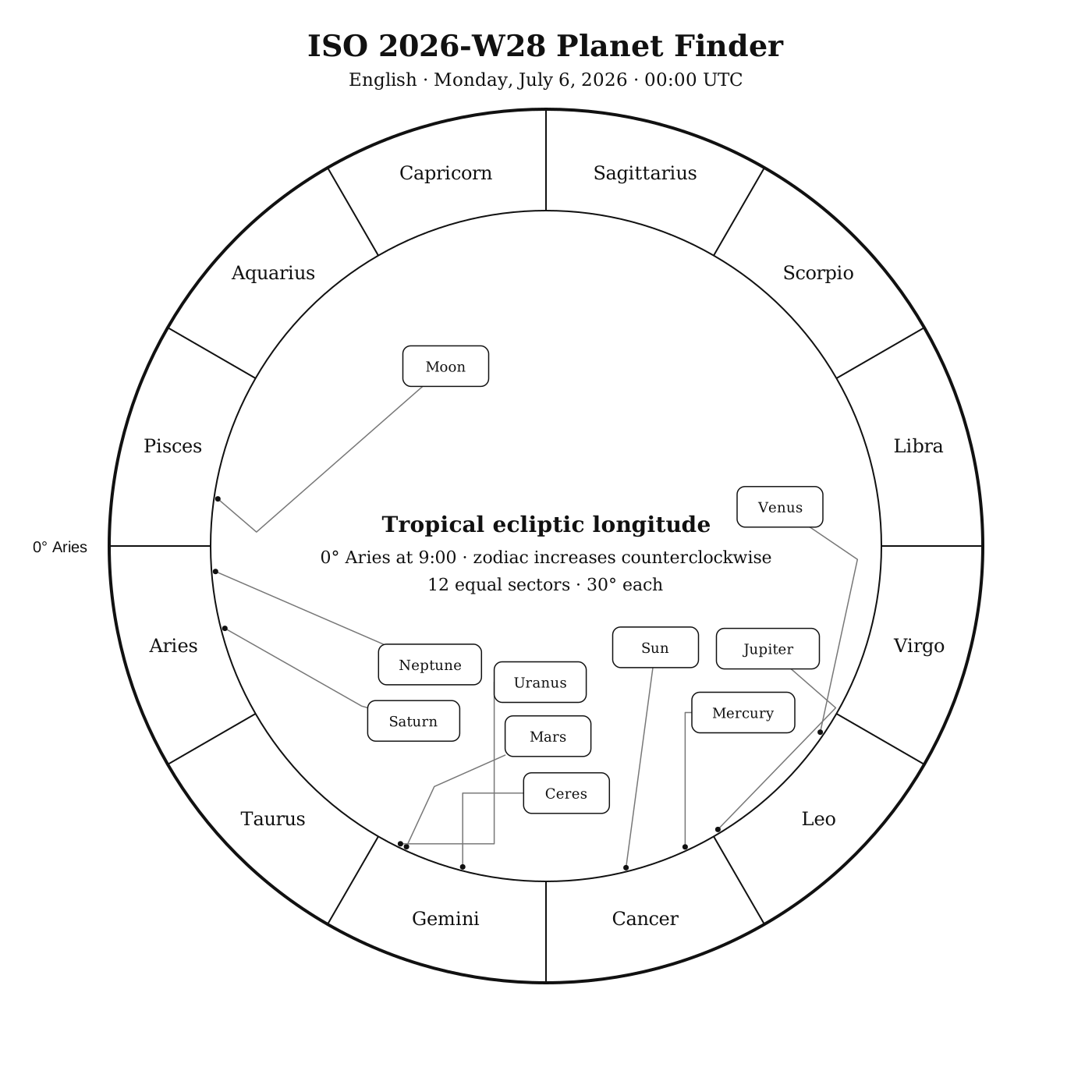
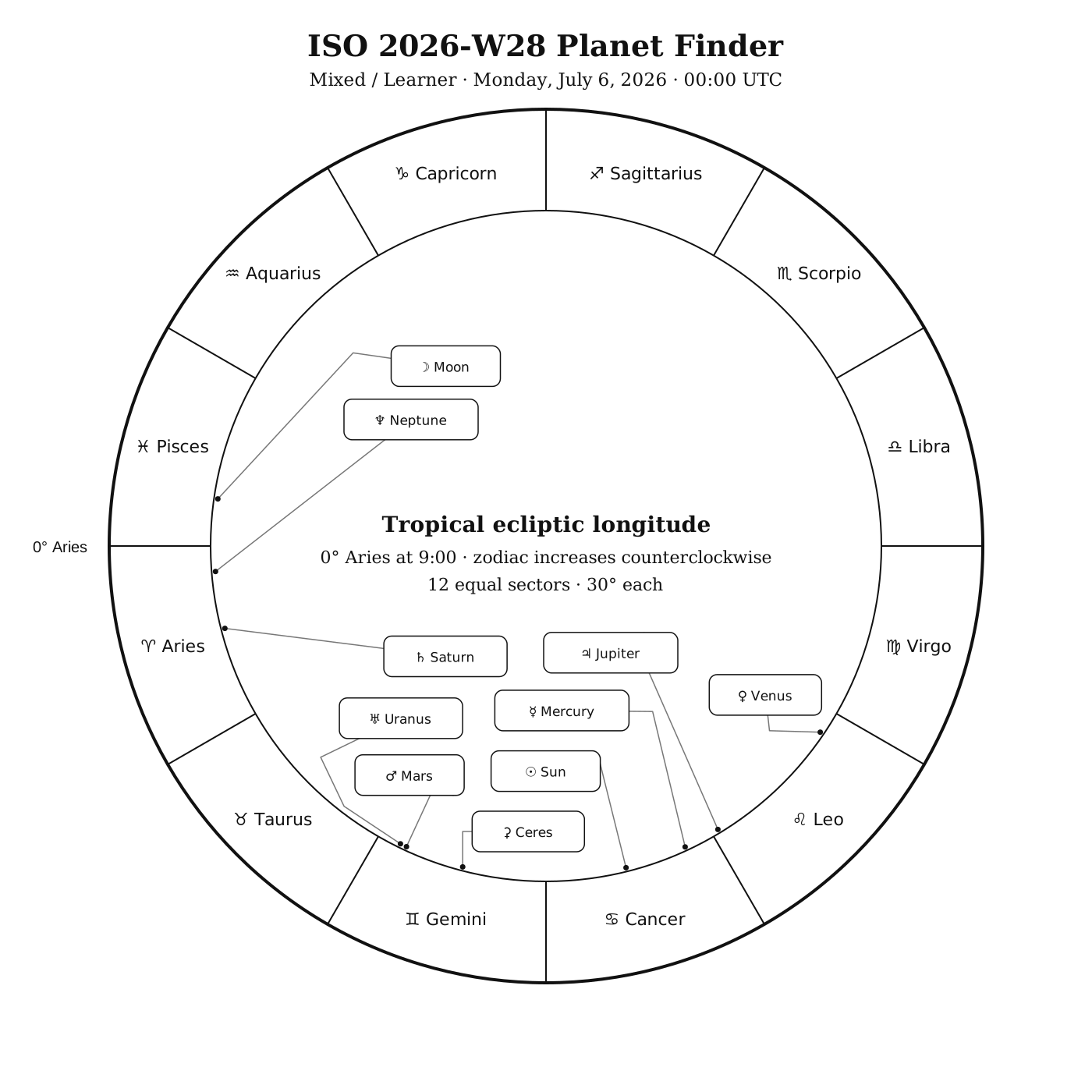
Sky Note
Last Quarter Moon on July 7 improves evening conditions, and Messier 80 (M80), globular cluster in Scorpius and Messier 4 (M4), globular cluster in Scorpius arrive on July 10 and 12 in the rich Scorpius region. They are both globular clusters, but they look very different and make an excellent side-by-side observing lesson.
Naked eye: Find Scorpius and its bright reddish star Antares, then trace the curved body of the constellation through Dschubba and Acrab. From northern mid-latitudes the constellation stays low, so choose a clear southern horizon.
Binoculars: Messier 4 (M4), globular cluster in Scorpius is the easier and broader target, appearing as a diffuse patch near Antares under a dark sky. Messier 80 (M80), globular cluster in Scorpius is smaller and more concentrated, looking more nearly stellar at first glance.
Small telescope: Messier 4 (M4), globular cluster in Scorpius begins to resolve into stars relatively readily and shows a loose structure for a globular cluster. Messier 80 (M80), globular cluster in Scorpius remains a compact, concentrated ball and generally needs more aperture or magnification before its outer stars become grainy.
What to expect: Two objects with the same catalog type can present opposite visual personalities. Messier 4 (M4), globular cluster in Scorpius is broad and loose; Messier 80 (M80), globular cluster in Scorpius is compact and dense. Comparing them teaches more than observing either one in isolation.
Asterism: The Keystone of Hercules is a compact four-star doorway into Hercules and a practical starting point for locating the Great Hercules Globular.
Chart
ISO2026-W28-chart.png — chart slot.