ISO 2026-W30
ISO dates: 2026-W30-1 through 2026-W30-7
Civil dates: Jul 20, 2026 – Jul 26, 2026
Calendar
| Date | Zodiac day | Events |
|---|---|---|
| Mon, Jul 20, 2026 | ♋ 30 | Draco center — Constellation —  V 3.7 — Arctic Summer V 3.7 — Arctic SummerM10 —  7 6.6 — Tropical Summer 7 6.6 — Tropical Summer |
| Tue, Jul 21, 2026 | ♋ 31 | 🌓 First Quarter — 11:05:36 UTC M62 — 7 6.5 — Southern SummerM19 — 7 6.8 — Southern Summer |
| Wed, Jul 22, 2026 | ♌ 1 | ♌ Sun enters Leo — 19:13:05 UTC |
| Thu, Jul 23, 2026 | ♌ 2 | Sabik (η Oph) —  2 2.4 — Tropical Summer 2 2.4 — Tropical Summer |
| Fri, Jul 24, 2026 | ♌ 3 | C69 / NGC 6302 · Bug Nebula — 13 12.8 — Southern SummerRasalgethi (α1 Her) — 3 3.4 — Tropical Summerα2 Her — 5 5.3 — Tropical Summer |
| Sat, Jul 25, 2026 | ♌ 4 | Hercules center — Constellation — V 3.8 — Northern SummerOphiuchus center — Constellation — V 3.3 — Tropical SummerM92 — 6 6.4 — Northern SummerM9 — 8 7.7 — Tropical Summer |
| Sun, Jul 26, 2026 | ♌ 5 | Ara center — Constellation — V 3.5 — Southern Summer |
Weekly Solar-System Ephemeris
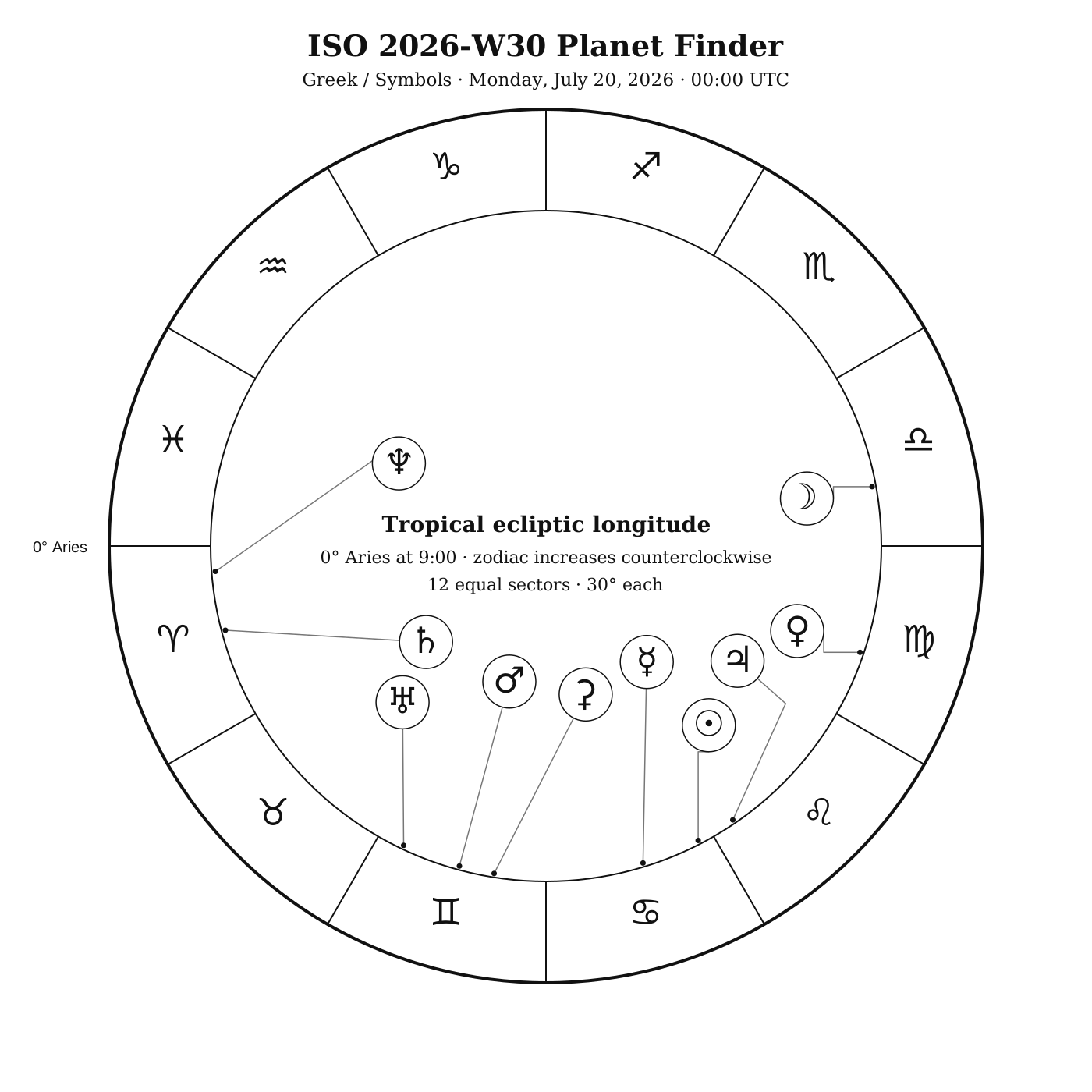
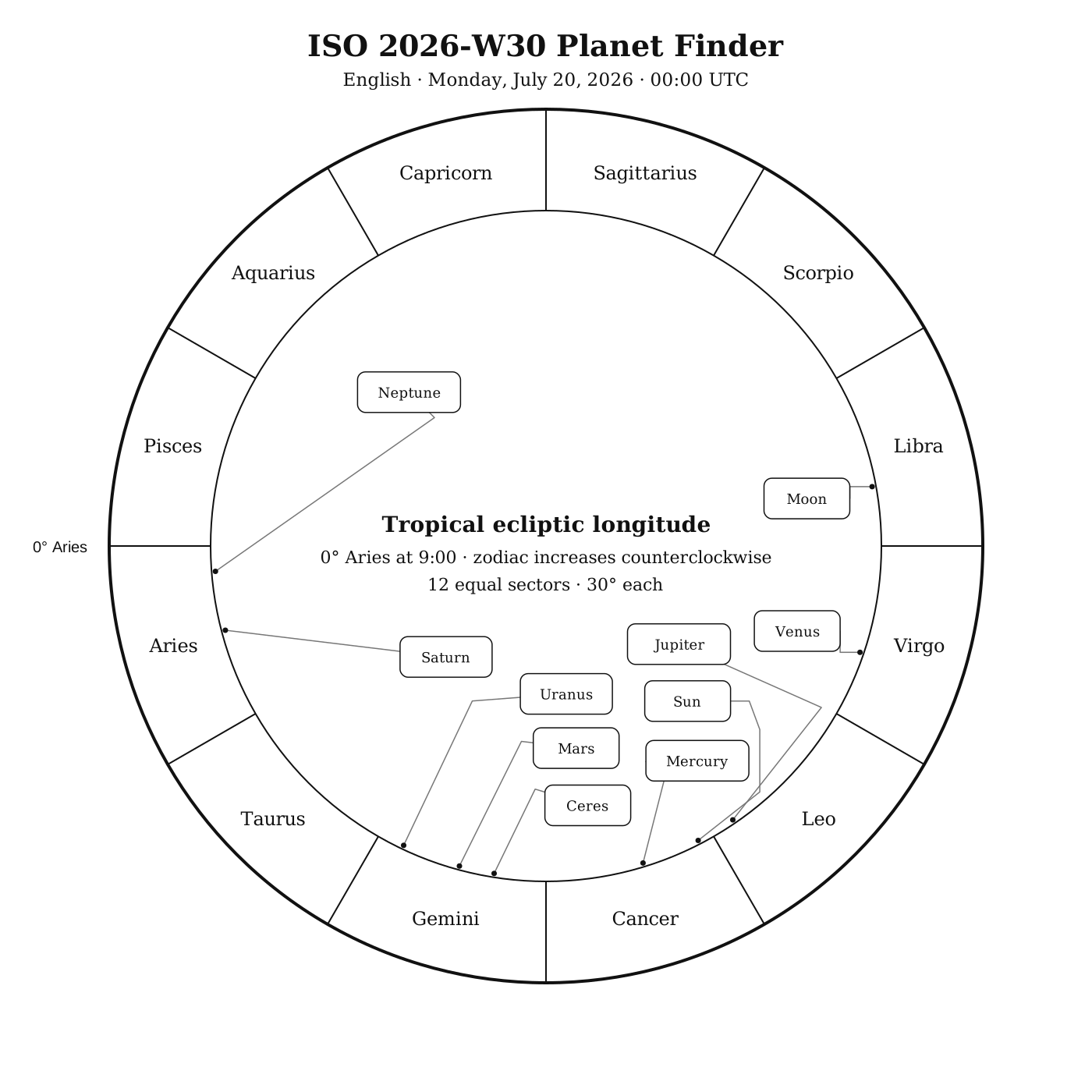
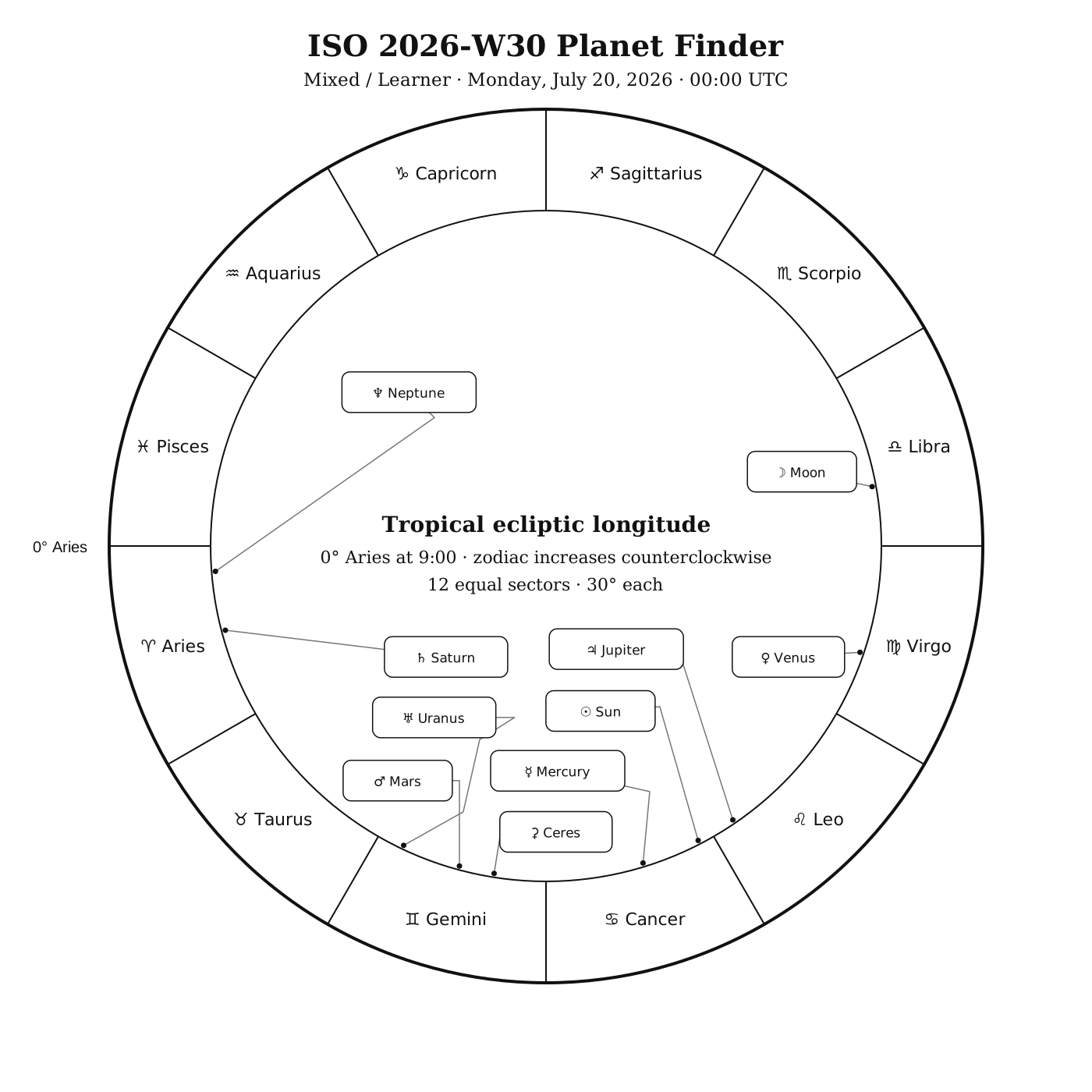
Snapshot: July 20, 2026 · 00:00 UTC
Naked Eye
| ☉︎ Sun | ☽︎ Moon | ☿︎ Mercury | ♀︎ Venus | ♂︎ Mars | ♃︎ Jupiter | ♄︎ Saturn |
|---|---|---|---|---|---|---|
| ♋︎ 27°20′ β −0°00′ | ♎︎ 10°19′ β −3°21′ | ♋︎ 17°01′ β −4°40′ | ♍︎ 11°18′ β +0°53′ | ♊︎ 14°52′ β −0°04′ | ♌︎ 4°18′ β +0°28′ | ♈︎ 14°43′ β −2°28′ |
| Observing | ||||||
| ☉ | | ☉ | | | ☉ | |
Extended targets:
| ⚳︎ Ceres | ♅︎ Uranus | ♆︎ Neptune | ♇︎ Pluto |
|---|---|---|---|
| ♊︎ 21°00′ β −1°48′ | ♊︎ 4°34′ β −0°09′ | ♈︎ 4°23′ β −1°23′ | ♒︎ 4°27′ β −4°16′ |
| Observing | |||
| | | |
β = ecliptic latitude (+ north, − south). Observing combines visual magnitude with solar elongation. Two telescope glyphs = substantial telescope. ☉ = Near Sun — not currently observable.
Planet Finder
Sky Note
This is a globular-cluster comparison week. Messier 10 (M10), globular cluster in Ophiuchus leads on July 20; Messier 19 (M19), globular cluster in Ophiuchus and Messier 62 (M62), globular cluster in Ophiuchus follow with First Quarter on July 21; then Messier 9 (M9), globular cluster in Ophiuchus and Messier 92 (M92), globular cluster in Hercules arrive July 25. The targets range from relatively easy northern globulars to low southern objects that reward a clear horizon.
Naked eye: Find Hercules and Ophiuchus between the bright summer landmarks Vega, Arcturus, and Antares. Rasalgethi and Sabik help define the region even before you begin hunting the clusters.
Binoculars: Messier 10 (M10), globular cluster in Ophiuchus and Messier 92 (M92), globular cluster in Hercules are the friendlier binocular targets, showing as compact fuzzy stars or small round glows. Messier 19 (M19), globular cluster in Ophiuchus and Messier 62 (M62), globular cluster in Ophiuchus sit much farther south and become increasingly sensitive to haze and your observing latitude.
Small telescope: Compare Messier 10 (M10), globular cluster in Ophiuchus's bright core and halo with the denser Messier 92 (M92), globular cluster in Hercules. Messier 9 (M9), globular cluster in Ophiuchus is smaller and fainter. Messier 19 (M19), globular cluster in Ophiuchus and Messier 62 (M62), globular cluster in Ophiuchus benefit from observing when they are highest above the southern horizon; aperture helps, but atmospheric transparency can matter just as much.
What to expect: Integrated magnitude does not tell the whole story. A low-altitude globular can look harder than a nominally fainter object higher in the sky. This week is an excellent practical lesson in altitude, concentration, and aperture.
Chart
ISO2026-W30-chart.png — chart slot.