ISO 2026-W48
ISO dates: 2026-W48-1 through 2026-W48-7
Civil dates: Nov 23, 2026 – Nov 29, 2026
Calendar
| Date | Zodiac day | Events |
|---|---|---|
| Mon, Nov 23, 2026 | ♐ 2 | Cassiopeia's W center — Asterism —  V 2.1 — Northern Autumn V 2.1 — Northern AutumnC70, NGC 300, spiral galaxy in Sculptor —  V 8.1 — Southern Autumn V 8.1 — Southern AutumnFinest NGC 7 / NGC 281 · PacMan Nebula — 7 7.4 — Northern AutumnC70 / NGC 300 — 8 8.1 — Southern Autumn |
| Tue, Nov 24, 2026 | ♐ 3 | 🌕 Full Moon · Moon Before Yule — 14:53:34 UTC Cih (γ Cas) — Var 2 2.2 1.6–3.0 — Northern Autumnα Scl —  4 4.3 — Southern Autumn 4 4.3 — Southern Autumn |
| Wed, Nov 25, 2026 | ♐ 4 | Cassiopeia center — Constellation — V 2.3 — Northern AutumnC104, NGC 362, globular cluster in Tucana — V 6.6 — Antarctic AutumnC104 / NGC 362 — 7 6.6 — Antarctic Autumn |
| Thu, Nov 26, 2026 | ♐ 5 | C51, IC 1613, irregular galaxy in Cetus — V 9.0 — Tropical AutumnC51 / IC 1613 — 9 9.0 — Tropical Autumnβ Phe — 3 3.3 — Southern Autumn |
| Fri, Nov 27, 2026 | ♐ 6 | Mirach (β And) — 2 2.1 — Northern Autumn |
| Sat, Nov 28, 2026 | ♐ 7 | |
| Sun, Nov 29, 2026 | ♐ 8 | C13 / NGC 457 · Phi Cassiopeiae Cluster / Finest NGC 8 / NGC 457 · ET Cluster — 6 6.4 — Northern Autumn |
Weekly Solar-System Ephemeris
Snapshot: November 23, 2026 · 00:00 UTC
Naked Eye
| ☉︎ Sun | ☽︎ Moon | ☿︎ Mercury | ♀︎ Venus | ♂︎ Mars | ♃︎ Jupiter | ♄︎ Saturn |
|---|---|---|---|---|---|---|
| ♐︎ 0°42′ β +0°00′ | ♉︎ 8°19′ β +4°48′ | ♏︎ 11°22′ β +2°16′ | ♎︎ 24°24′ β +0°12′ | ♌︎ 28°47′ β +2°06′ | ♌︎ 26°23′ β +0°46′ | ♈︎ 8°13′ β −2°37′ |
| Observing | ||||||
| ☉ | | ☉ | | | | |
Extended targets:
| ⚳︎ Ceres | ♅︎ Uranus | ♆︎ Neptune | ♇︎ Pluto |
|---|---|---|---|
| ♋︎ 23°57′ β +4°00′ | ♊︎ 3°48′ β −0°09′ | ♈︎ 1°44′ β −1°24′ | ♒︎ 3°24′ β −4°16′ |
| Observing | |||
| | | |
β = ecliptic latitude (+ north, − south). Observing combines visual magnitude with solar elongation. Two telescope glyphs = substantial telescope. ☉ = Near Sun — not currently observable.
Planet Finder
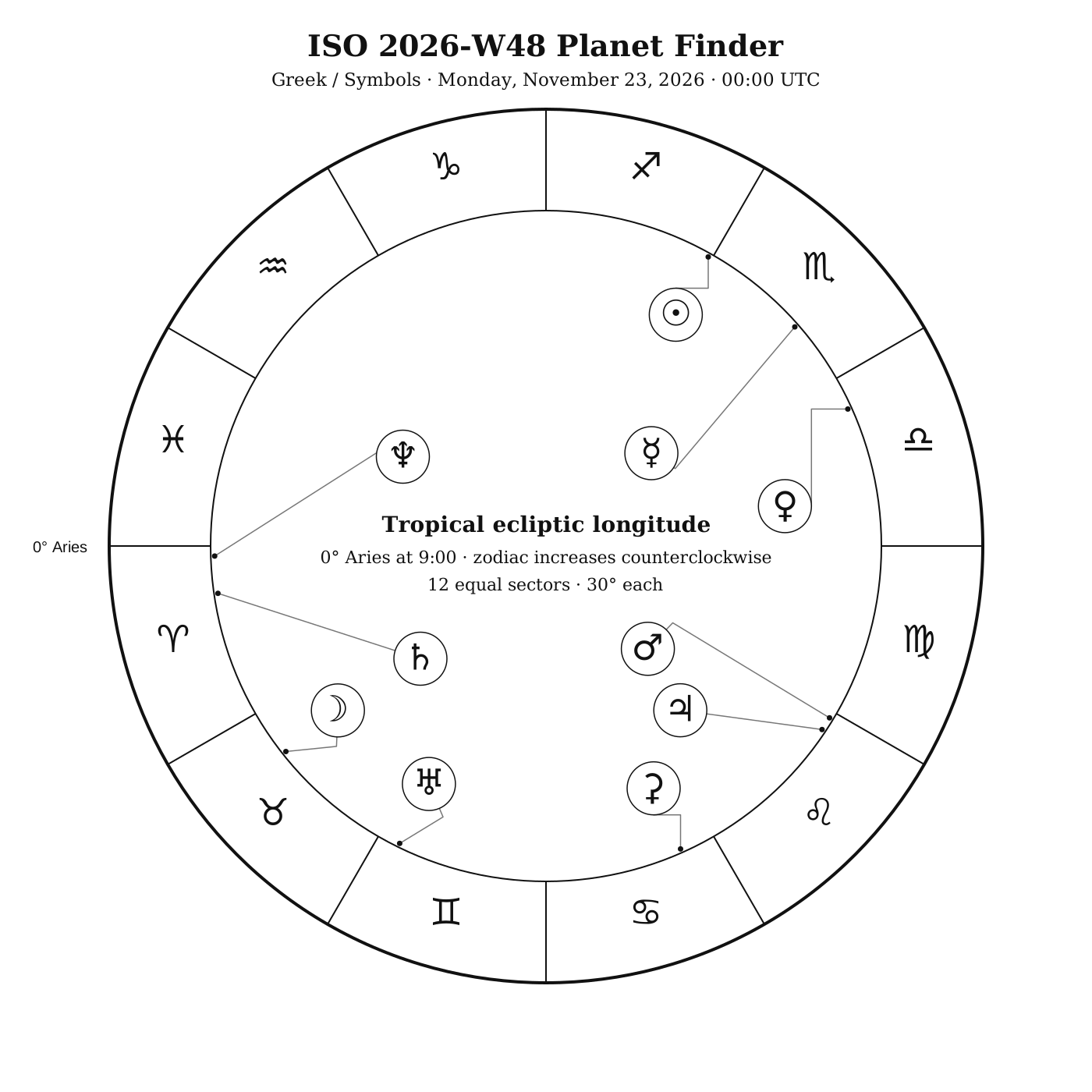
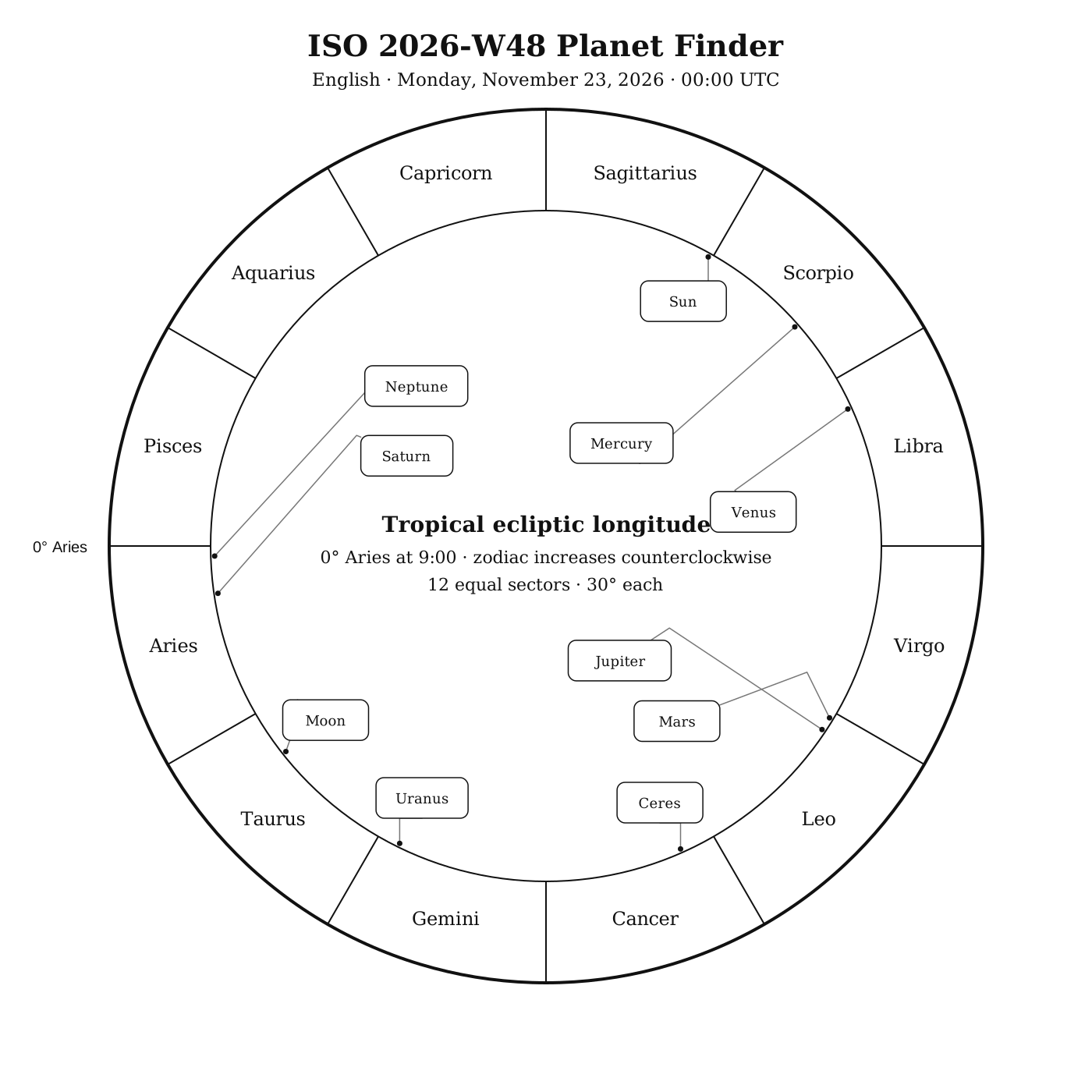
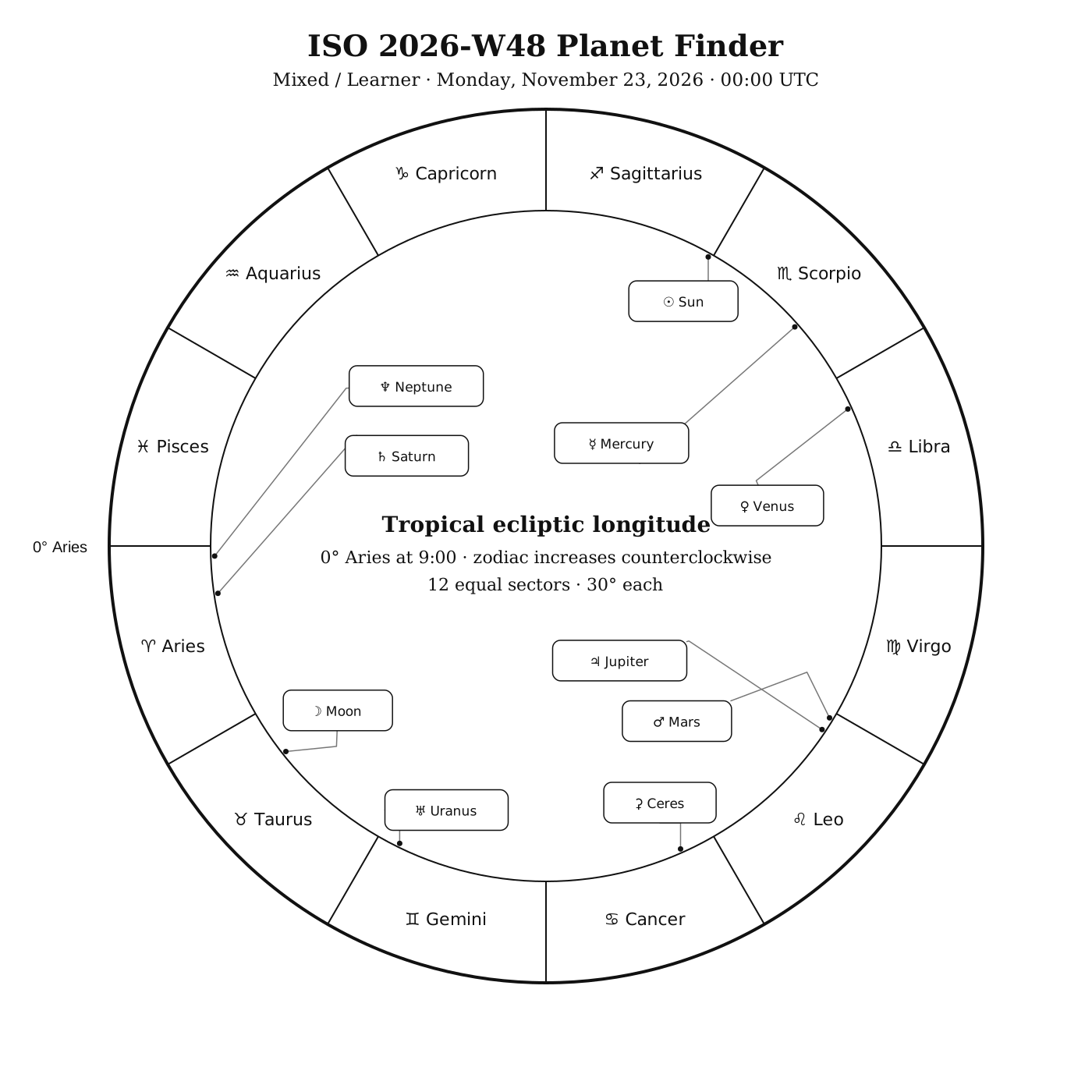
Sky Note
Full Moon occurs Tuesday, November 24, so this is not the strongest week for faint galaxies and nebulae. Instead, use the bright sky to learn the autumn framework: Cassiopeia, Andromeda, Pegasus, and the conspicuous stars Cih (γ Cassiopeiae) and Mirach (β Andromedae).
Naked eye: Concentrate on constellation shapes and bright-star identification. Moonlight suppresses faint background stars, which can actually make the principal patterns easier for a beginner to recognize.
Binoculars: Binoculars remain useful around bright stars and open star fields even under moonlight. Sweep along the Andromeda chain through Mirach and compare how many field stars remain visible as you move closer to or farther from the Moon.
Small telescope: Favor double stars, bright stellar fields, and lunar observing over very faint deep-sky targets. The Moon itself rewards modest magnification, especially along the terminator where shadows make relief obvious.
What to expect: A bright Moon can erase low-contrast galaxies and nebulae without ruining the entire observing session. This is a good week to learn that choosing the right target for the conditions is part of observational astronomy.
Chart
ISO2026-W48-chart.png — chart slot.