ISO 2026-W49
ISO dates: 2026-W49-1 through 2026-W49-7
Civil dates: Nov 30, 2026 – Dec 6, 2026
Calendar
| Date | Zodiac day | Events |
|---|---|---|
| Mon, Nov 30, 2026 | ♐ 9 | |
| Tue, Dec 1, 2026 | ♐ 10 | C8, NGC 559, open cluster in Cassiopeia —  V 9.5 — Northern Autumn V 9.5 — Northern Autumn🌗 Last Quarter — 06:08:40 UTC C8 / NGC 559 — 10 9.5 — Northern Autumn |
| Wed, Dec 2, 2026 | ♐ 11 | M74, spiral galaxy in Pisces — V 9.4 — Tropical AutumnM103 — 7 7.4 — Northern AutumnM33 — 6 5.7 — Northern Autumn |
| Thu, Dec 3, 2026 | ♐ 12 | Cetus center — Constellation —  V 3.6 — Tropical Autumn V 3.6 — Tropical AutumnM74 — 9 9.4 — Tropical AutumnAchernar (α Eri) —  0 0.5 — Southern Autumn 0 0.5 — Southern Autumn |
| Fri, Dec 4, 2026 | ♐ 13 | M76 — 10 10.1 — Northern Autumn |
| Sat, Dec 5, 2026 | ♐ 14 | C10, NGC 663, open cluster in Cassiopeia — V 7.1 — Finest NGC — Northern AutumnC10 / NGC 663 / Finest NGC 9 / NGC 663 · Collinder 20 — 7 7.1 — Northern Autumn |
| Sun, Dec 6, 2026 | ♐ 15 |
Weekly Solar-System Ephemeris
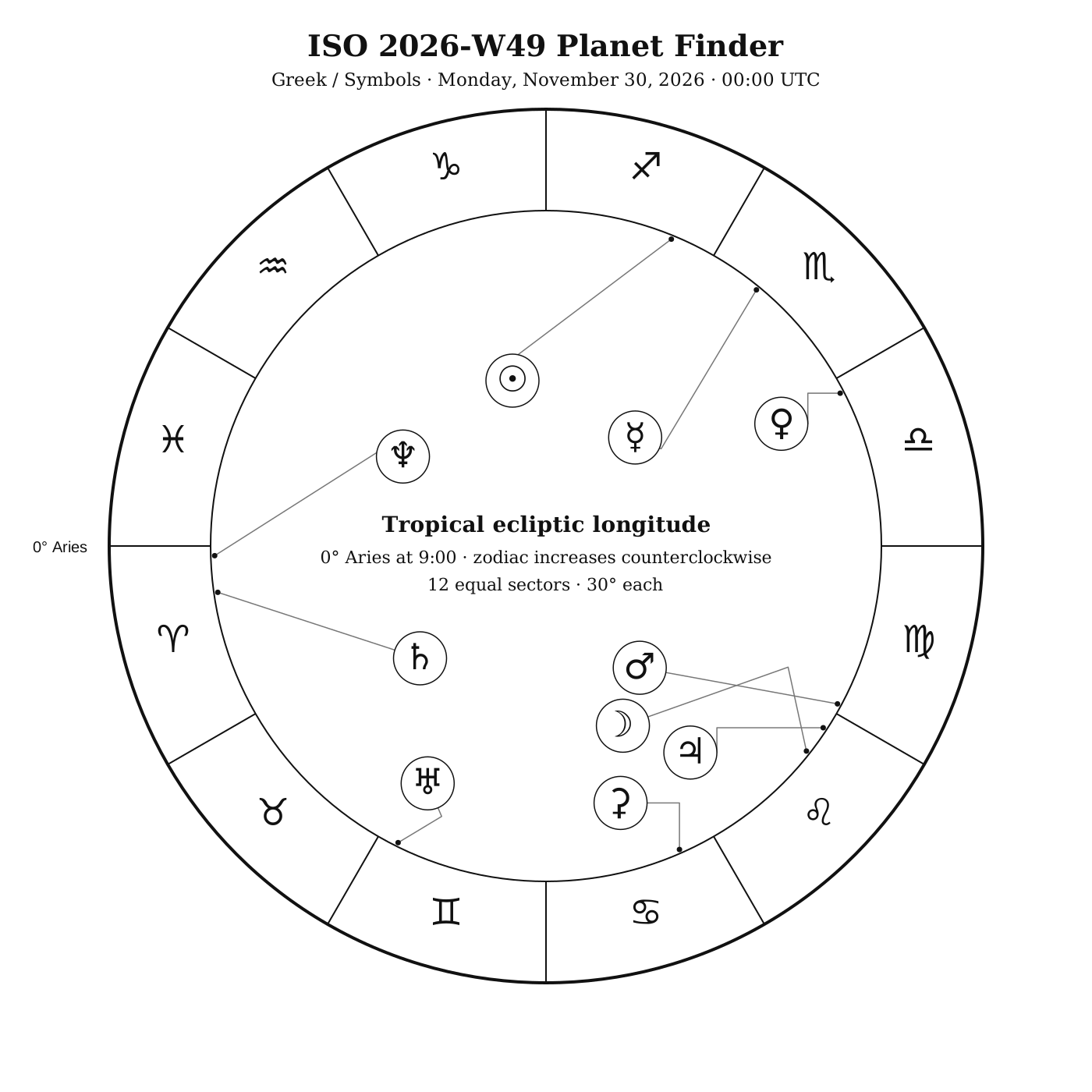
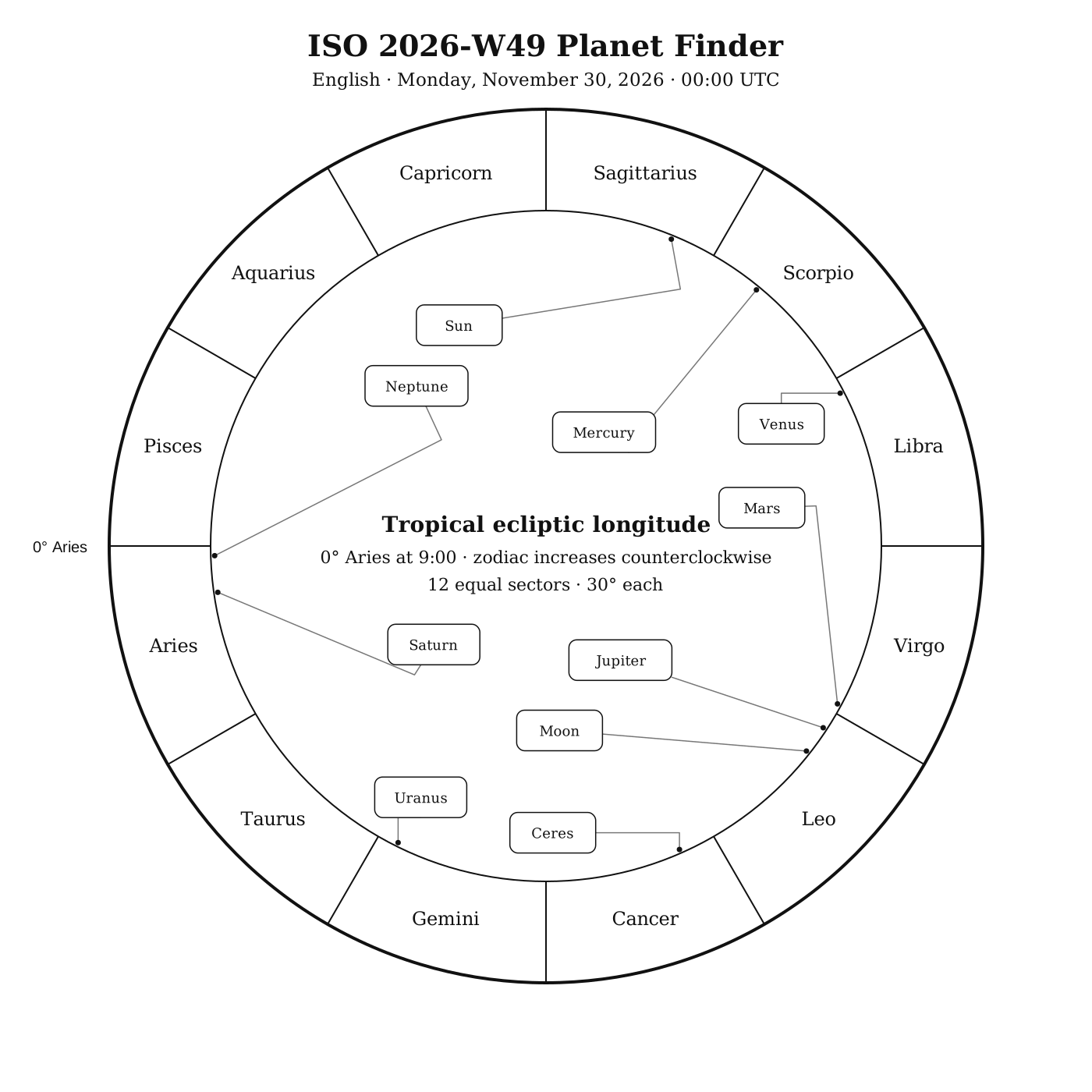
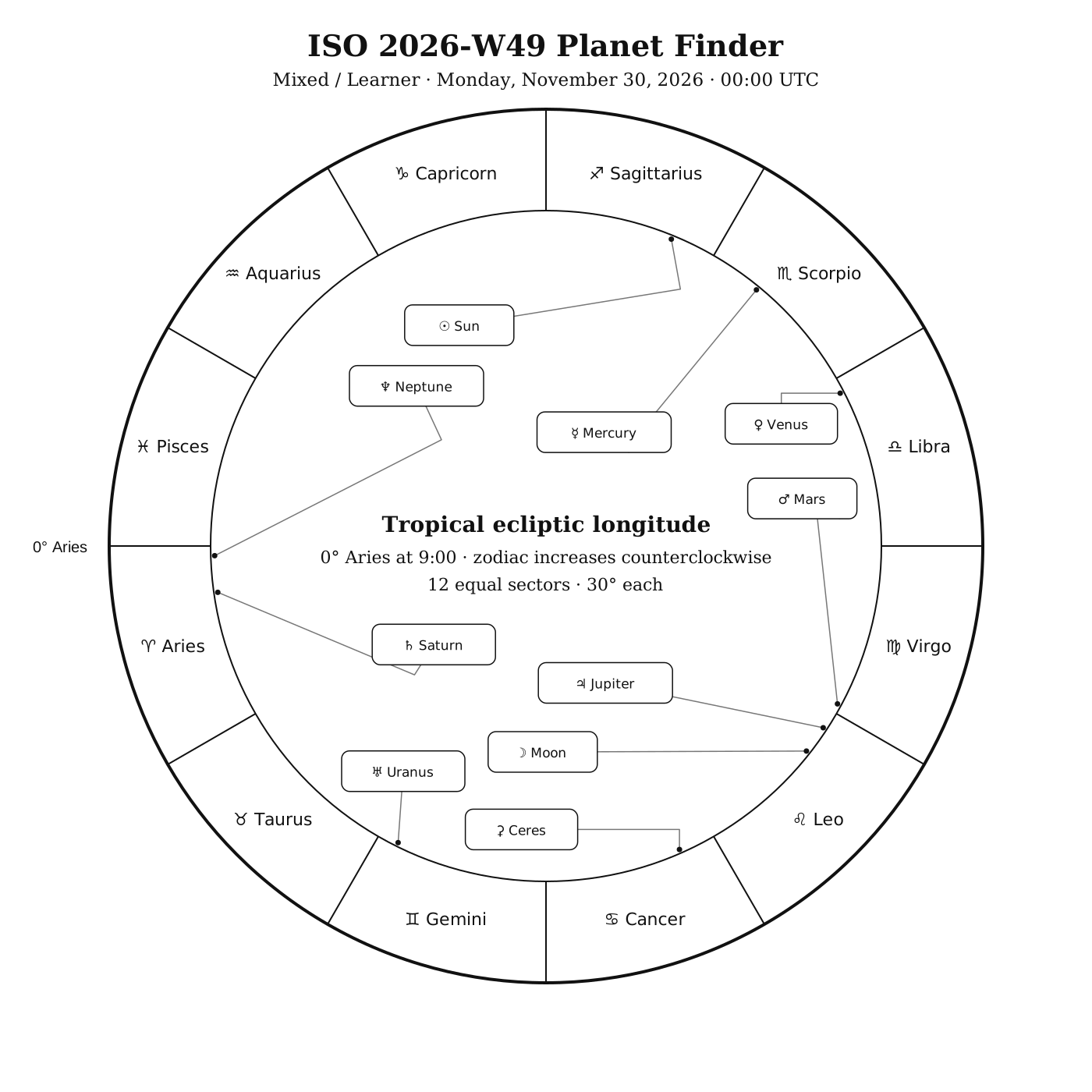
Snapshot: November 30, 2026 · 00:00 UTC
Naked Eye
| ☉︎ Sun | ☽︎ Moon | ☿︎ Mercury | ♀︎ Venus | ♂︎ Mars | ♃︎ Jupiter | ♄︎ Saturn |
|---|---|---|---|---|---|---|
| ♐︎ 7°47′ β +0°00′ | ♌︎ 21°47′ β +0°11′ | ♏︎ 20°36′ β +1°39′ | ♎︎ 27°27′ β +1°19′ | ♍︎ 1°34′ β +2°17′ | ♌︎ 26°45′ β +0°48′ | ♈︎ 8°02′ β −2°35′ |
| Observing | ||||||
| ☉ | | ☉ | | | | |
Extended targets:
| ⚳︎ Ceres | ♅︎ Uranus | ♆︎ Neptune | ♇︎ Pluto |
|---|---|---|---|
| ♋︎ 23°44′ β +4°34′ | ♊︎ 3°30′ β −0°09′ | ♈︎ 1°40′ β −1°24′ | ♒︎ 3°32′ β −4°15′ |
| Observing | |||
| | | |
β = ecliptic latitude (+ north, − south). Observing combines visual magnitude with solar elongation. Two telescope glyphs = substantial telescope. ☉ = Near Sun — not currently observable.
Planet Finder
Sky Note
Last Quarter Moon occurs Tuesday, December 1, and the week brings several contrasting deep-sky targets: Triangulum Galaxy (M33), spiral galaxy in Triangulum in Triangulum, Messier 74 (M74), spiral galaxy in Pisces in Pisces, Messier 103 (M103), open cluster in Cassiopeia in Cassiopeia, and the Little Dumbbell Nebula Little Dumbbell Nebula (M76), planetary nebula in Perseus in Perseus. Together they make an excellent lesson in surface brightness and instrument choice.
Naked eye: Use the small constellation Triangulum and the larger shapes of Cassiopeia and Perseus as the orientation framework. Triangulum Galaxy (M33), spiral galaxy in Triangulum is sometimes reported with the unaided eye from exceptionally dark sites, but it is a difficult low-contrast test and should not be expected under ordinary suburban skies.
Binoculars: Triangulum Galaxy (M33), spiral galaxy in Triangulum is the standout binocular challenge. Rather than looking for a crisp boundary, look for a very broad, faint brightening of the background. Messier 103 (M103), open cluster in Cassiopeia is easier as a compact star cluster and benefits from the wide field around Cassiopeia.
Small telescope: Messier 74 (M74), spiral galaxy in Pisces is a difficult face-on galaxy whose low surface brightness makes dark sky more valuable than excessive magnification. Little Dumbbell Nebula (M76), planetary nebula in Perseus is much smaller and responds better to telescopic magnification, appearing as a compact gray nebular patch; Messier 103 (M103), open cluster in Cassiopeia begins to resolve cleanly into individual stars.
What to expect: Integrated magnitude can be misleading. A large galaxy can have plenty of total light yet still be hard to see because that light is spread over a large area. This week is a practical demonstration of why surface brightness matters.
Chart
ISO2026-W49-chart.png — chart slot.