ISO 2026-W50
ISO dates: 2026-W50-1 through 2026-W50-7
Civil dates: Dec 7, 2026 – Dec 13, 2026
Calendar
| Date | Zodiac day | Events |
|---|---|---|
| Mon, Dec 7, 2026 | ♐ 16 | Mothallah (α Tri) —  3 3.4 — Northern Autumn 3 3.4 — Northern AutumnSheratan (β Ari) — 3 2.6 — Tropical Autumn |
| Tue, Dec 8, 2026 | ♐ 17 | C28, NGC 752, open cluster in Andromeda —  V 5.7 — Northern Autumn V 5.7 — Northern AutumnNGC 772, galaxy in Aries —  V 10.6 — Finest NGC — Tropical Autumn V 10.6 — Finest NGC — Tropical AutumnC28 / NGC 752 — 6 5.7 — Northern Autumnα Hyi — 3 2.9 — Southern AutumnFinest NGC 14 / NGC 772 · Arp 78 — 11 10.6 — Tropical Autumn |
| Wed, Dec 9, 2026 | ♐ 18 | 🌑 New Moon — 00:51:51 UTC Alrescha (α Psc) — 4 3.8 — Tropical AutumnAlmach (Gam-1) — 2 2.1 — Northern Autumn |
| Thu, Dec 10, 2026 | ♐ 19 | Triangulum center — Constellation — V 3.4 — Northern AutumnHamal (α Ari) — 2 2.0 — Northern Autumnβ Tri — 3 3.0 — Northern Autumn |
| Fri, Dec 11, 2026 | ♐ 20 | |
| Sat, Dec 12, 2026 | ♐ 21 | |
| Sun, Dec 13, 2026 | ♐ 22 | Hydrus center — Constellation — V 2.9 — Antarctic AutumnC14, NGC 869/884, Double Cluster, open cluster in Perseus — V 4.3 — Finest NGC — Northern AutumnMira (ο Ceti) (variable brightness) — Tropical Autumn C14 / NGC 869/884 · Double Cluster — 4 4.3 — Northern AutumnFinest NGC 17 / NGC 884 · Double Cluster with 869 — 4 4.4 — Northern AutumnFinest NGC 12 / NGC 891 · Silver Needle / C23 / NGC 891 — 11 10.9 — Northern Autumn |
Weekly Solar-System Ephemeris
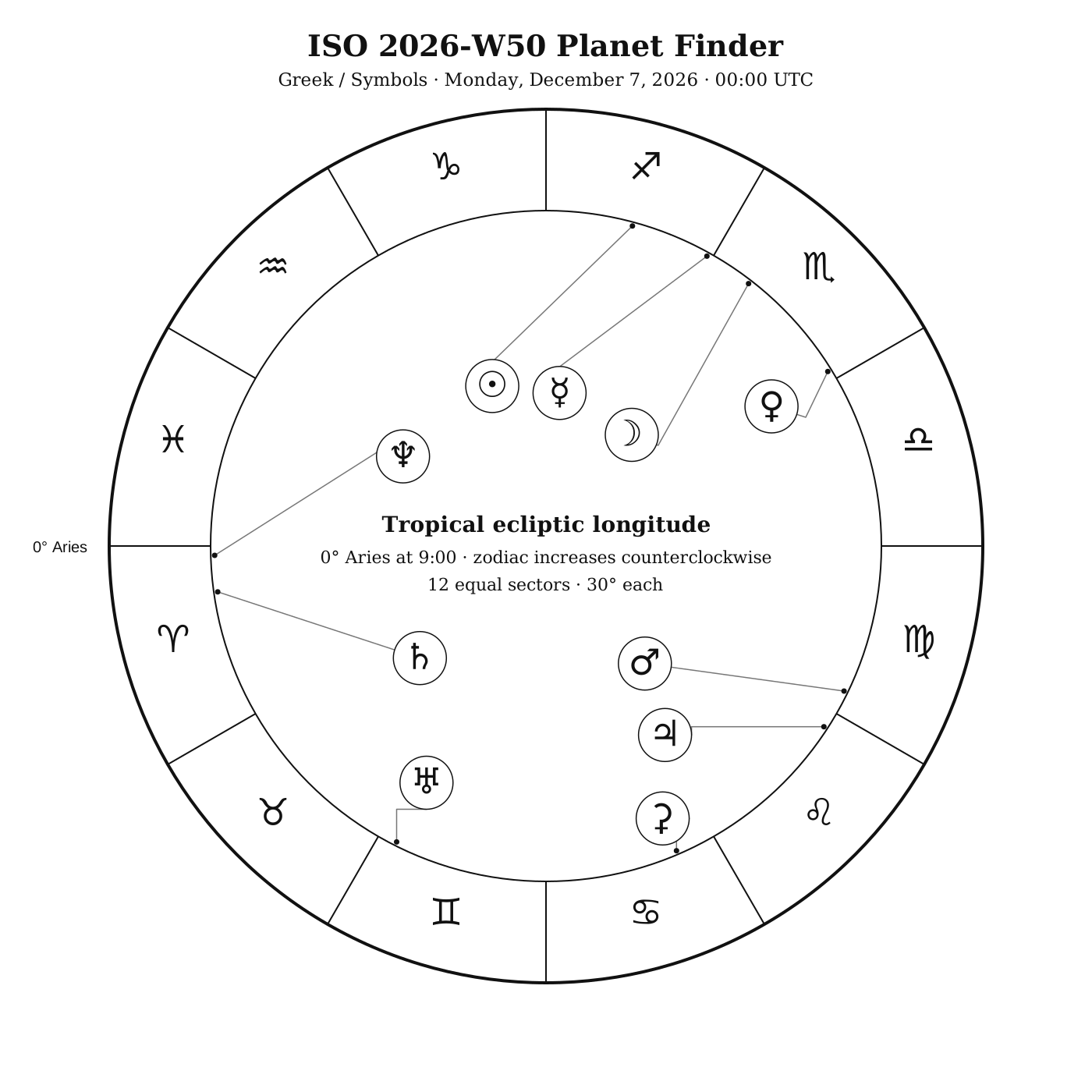
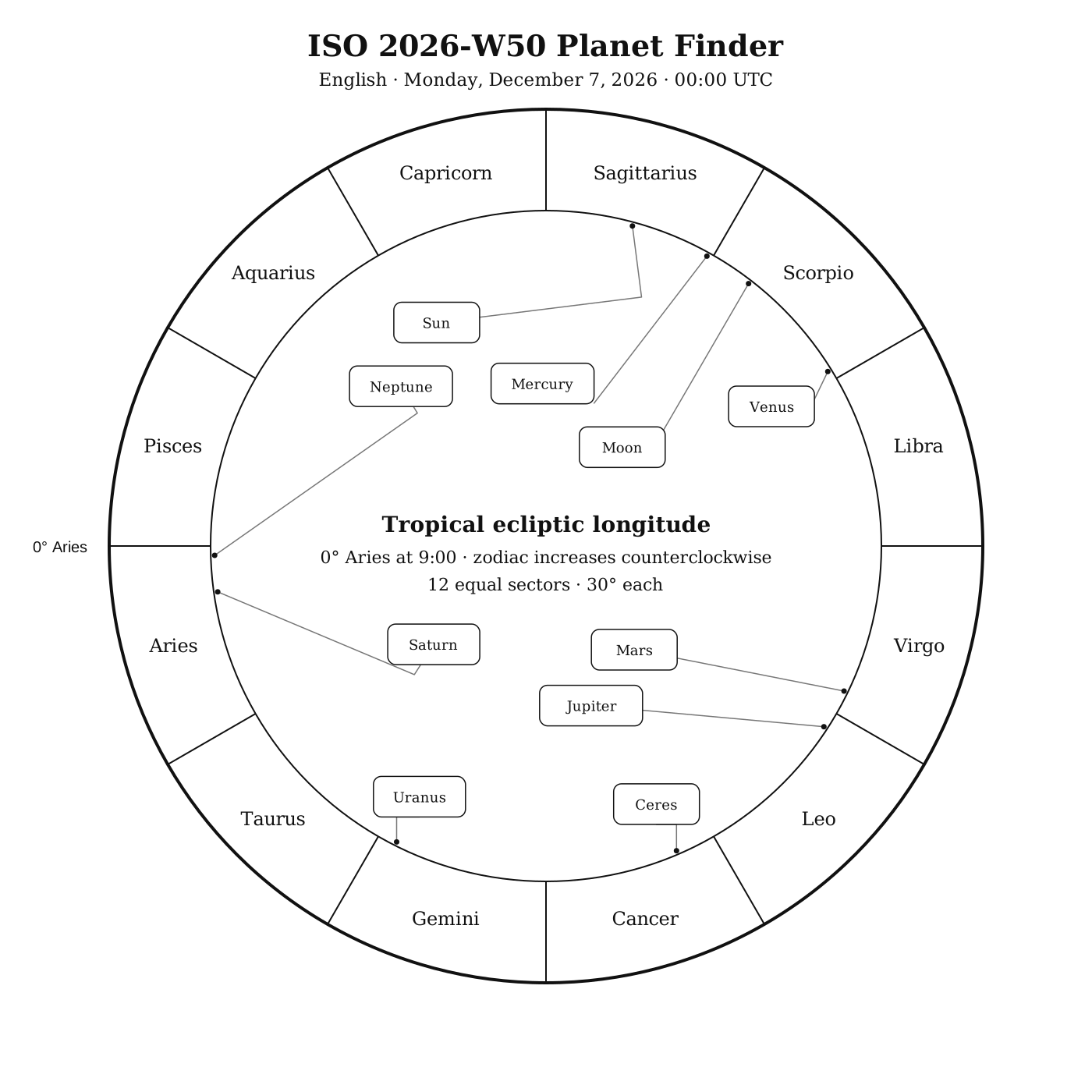
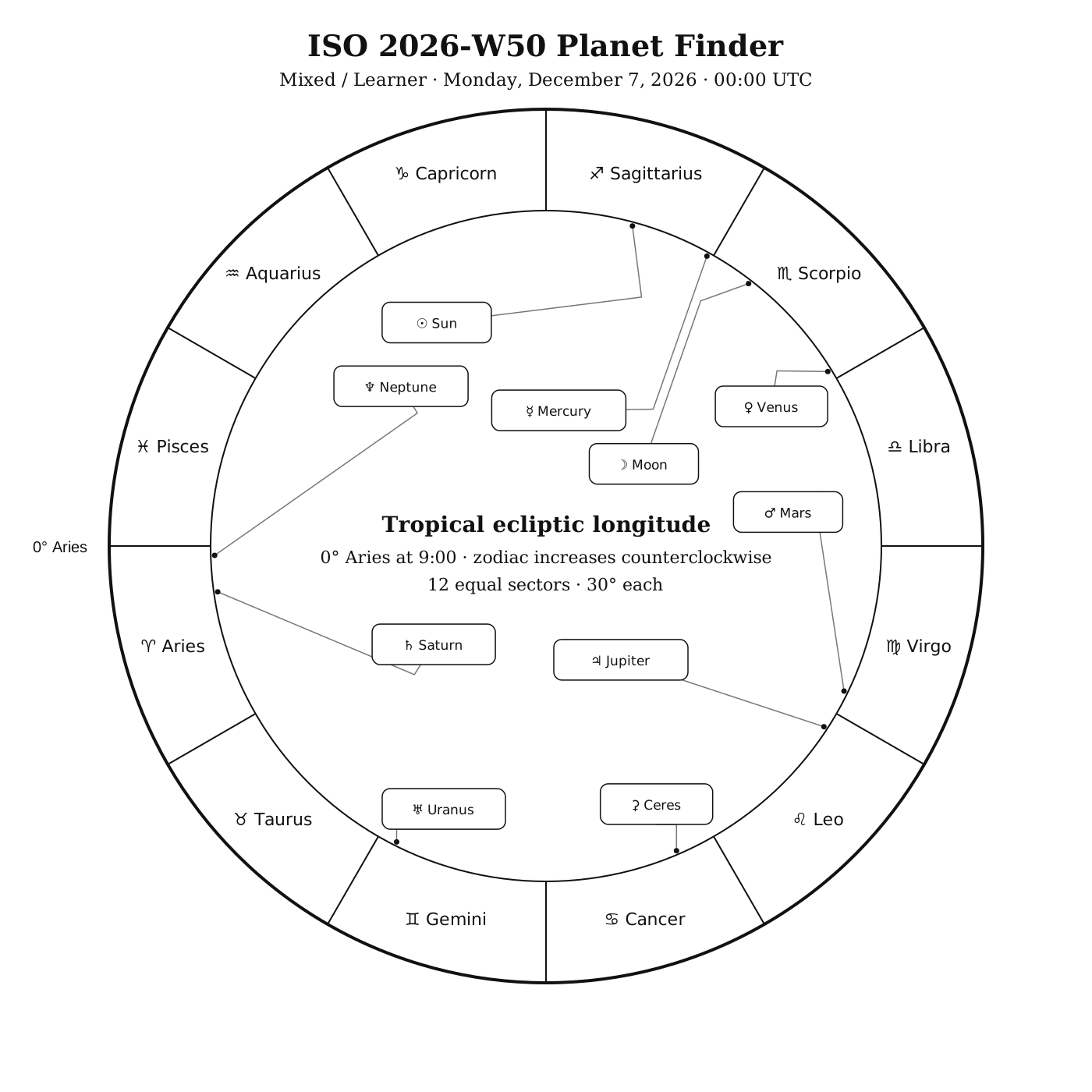
Snapshot: December 7, 2026 · 00:00 UTC
Naked Eye
| ☉︎ Sun | ☽︎ Moon | ☿︎ Mercury | ♀︎ Venus | ♂︎ Mars | ♃︎ Jupiter | ♄︎ Saturn |
|---|---|---|---|---|---|---|
| ♐︎ 14°53′ β −0°00′ | ♏︎ 22°20′ β −5°02′ | ♐︎ 0°58′ β +0°50′ | ♏︎ 1°46′ β +2°09′ | ♍︎ 4°03′ β +2°29′ | ♌︎ 26°58′ β +0°50′ | ♈︎ 7°57′ β −2°34′ |
| Observing | ||||||
| ☉ | | ☉ | | | | |
Extended targets:
| ⚳︎ Ceres | ♅︎ Uranus | ♆︎ Neptune | ♇︎ Pluto |
|---|---|---|---|
| ♋︎ 23°11′ β +5°09′ | ♊︎ 3°13′ β −0°09′ | ♈︎ 1°37′ β −1°24′ | ♒︎ 3°41′ β −4°15′ |
| Observing | |||
| | | |
β = ecliptic latitude (+ north, − south). Observing combines visual magnitude with solar elongation. Two telescope glyphs = substantial telescope. ☉ = Near Sun — not currently observable.
Planet Finder
Sky Note
The Moon is waning after Last Quarter, so evening skies become progressively friendlier to faint autumn targets. Sheratan in Aries and Mothallah in Triangulum give a simple naked-eye framework for returning to the Triangulum Galaxy (M33), spiral galaxy in Triangulum region while the winter constellations begin to claim more of the eastern evening sky.
Naked eye: Find the compact pattern of Aries, then the small triangle of Triangulum nearby. The value this week is orientation: learn these modest constellations before trying to extract faint galaxies from the background.
Binoculars: Sweep Triangulum slowly. Under a dark sky, Triangulum Galaxy (M33), spiral galaxy in Triangulum is a broad, low-contrast brightening rather than a sharply bounded object. Wide-field binoculars are often more effective than high magnification because they preserve contrast and surrounding reference stars.
Small telescope: Use low power first on Triangulum Galaxy (M33), spiral galaxy in Triangulum; increasing magnification too quickly can make the galaxy harder to recognize. Under good conditions a small telescope strengthens the central region and hints at uneven texture, but photographic spiral structure should not be expected.
What to expect: This is a week for learning how slowly the eye detects faint extended light. Do not expect a galaxy to announce itself like a star. Scan, stop, use averted vision, and allow several seconds for the faint glow to become convincing.
Asterism: Cassiopeia's familiar W shape is a strong northern anchor and a practical guide into the dense Milky Way fields of Cassiopeia and Perseus.
Chart
ISO2026-W50-chart.png — chart slot.